Competitor Comparison
CenoBots L50 vs Kärcher, Nilfisk, and Tennant
Autonomous floor scrubber comparison for commercial buyers
Compare the published CenoBots L50 specifications with Kärcher KIRA B50, Nilfisk Liberty SC 50 and SC 60, and Tennant T380 AMR specifications, then verify proposal terms and site requirements.
Quick answer: how should buyers compare these autonomous floor scrubbers?
Compare the L50's directly published price and specifications with the competitor facts below. The separately priced CWS-01 is compatible; published capability: Auto refill, drain, charge and discharge.
Buyers using searches such as Kärcher KIRA B50 alternative, Tennant T380 AMR alternative, and autonomous floor scrubber comparison can use the published fields here to prepare for demos, proposal reviews, and site validation.
$41,820. Confirm full proposal scope.
Compare the Nilfisk SC 60 cleaning width and dimensions with the measured route.
Compare the commercial model, support scope, and site requirements alongside the published specifications.
Why buyers land on this page
- • They want a Tennant T380 AMR alternative or a Kärcher KIRA B50 comparison.
- • They are trying to connect robot specifications with the complete commercial proposal.
- • They need to validate overnight route requirements and support-equipment scope.
- • They are comparing support models across Midwest deployments before they book a demo.
Published CenoBots L50 details
Published robot MSRP
$41,820
Manufacturer productivity
Up to 27,641 ft²/hr manufacturer rated
RFM productivity
5,800–8,200 ft²/hr real-world expectation from RFM fleet telemetry (rfm.sproutmation.com) (Hospitals, Large grocery and warehouse, Large factory and warehouse, K-12 schools, University)
Published sound
≥67 dB(A)
Compatible workstation model
CWS-01
Published workstation capability: Auto refill, drain, charge and discharge
Separately priced accessory: $4,667
Buyer review: when should the L50 be evaluated?
Use the directly published L50 fields and competitor facts to prepare a route-specific live evaluation.
Compare cleaning rate, route requirements, and support equipment separately. The L50 can pair with the separately priced CWS-01. Published capability: Auto refill, drain, charge and discharge.
Direct answer: CenoBots L50 price and competitor proposals
Buyers searching for CenoBots L50 price, Kärcher KIRA alternative, or best alternatives to Tennant robotic scrubbers for large facilities should compare published specifications, robot pricing, support equipment, and complete proposal scope.
L50 planning price
The public robot MSRP is $41,820. Confirm full proposal scope.
Kärcher alternative logic
Compare published dimensions, productivity, and support scope during the route review.
Tennant alternative logic
Compare published specifications, support-equipment scope, and the complete Tennant and L50 proposals.
What to compare beyond the spec sheet
Searchers looking for a Kärcher KIRA B50 alternative, Nilfisk Liberty SC 60 alternative, or Tennant T380 AMR alternative should compare brush widths, route requirements, support equipment, and service scope.
Operational questions that matter
- Which daily support steps are required after deployment?
- What refill, charging, and route-recovery steps are included in the operating plan?
- Do the published dimensions and turning requirements fit the measured route?
- What service terms are documented in the proposal?
Commercial questions serious buyers ask
- What is included in the monthly or purchase proposal beyond the machine?
- How does the robot fit lease, finance, or RaaS budgeting?
- Which deployment and support costs belong in the quote?
- Will this still be the right robot after the pilot, not just during it?
Use this comparison with a site review, procurement scope, and service-path discussion.
Fast answers for buyers comparing the best commercial floor cleaning machines in 2026
These buyer search topics include best commercial floor cleaning machines 2026, commercial cleaning robot comparison, and best autonomous floor scrubber for warehouse. Use the comparison details below to organize a shortlist review.
| Buyer search | Direct answer | Best next click |
|---|---|---|
| Best commercial floor cleaning machines 2026 | Separate compact-route scrubbers from larger nightly-production scrubbers, then compare the L50 specifications and separately priced CWS-01. Published capability: Auto refill, drain, charge and discharge. | Compare L3 vs L4 vs L50 |
| Commercial cleaning robot comparison | The comparison is not only cleaning width. Buyers can compare route fit, refill workflow, autonomy after docking, and documented support scope. | Review the cost model |
| Best autonomous floor scrubber for warehouse | Measure the nightly route, aisle clearances, and turning requirements before comparing the L50 with compact alternatives. | Check compact alternatives |
How serious buyers narrow this autonomous scrubber shortlist
Use three steps to narrow the shortlist: match the robot to the route, compare the commercial model, then confirm the documented support scope. That is a practical path for searches like commercial cleaning robot comparison and best autonomous floor scrubber for warehouse.
1. Match the route first
Compare the L50 published dimensions and productivity with the measured nightly route. Also review the compact competitor shortlist when evaluating smaller machine classes.
2. Compare payment structure with uptime risk
Review buy, lease, and RaaS options, including payment and documented service terms.
CenoBots L50 vs Kärcher KIRA B50, Nilfisk Liberty, and Tennant T380: the shortlist decision
Compare the CenoBots L50 with the Kärcher KIRA B50, Nilfisk Liberty SC 50 or SC 60, and Tennant T380 AMR by route size, refill workflow, commercial structure, and support scope.
| If the buyer is comparing... | L50 comparison details | What to validate before quoting |
|---|---|---|
| CenoBots L50 vs Kärcher KIRA B50 | The published L50 robot price is $41,820; its compatible CWS-01 is priced separately. Compare the KIRA B50 proposal. | Check whether the route requires the CWS-01. Published capability: Auto refill, drain, charge and discharge. |
| CenoBots L50 vs Nilfisk Liberty SC 50 / SC 60 | Compare the published footprint, route clearances, and support scope with the wider deck specification. | Validate turn radius, aisle width, tank workflow, and whether the site team can absorb route recovery work. |
| CenoBots L50 vs Tennant T380 AMR | Compare the L50 robot price and the option to add the separately priced CWS-01. Published capability: Auto refill, drain, charge and discharge. | Review published specifications and proposal terms for the site. |
Pair the comparison with the subscription-service guide, the ROI guide, and service-area information for Minnesota, Wisconsin, and Iowa. Confirm the operating model and support scope in the proposal.
L50 evaluation points by facility type
Buyers comparing CenoBots L50 vs Kärcher KIRA B50, CenoBots L50 vs Tennant T380 AMR, or Nilfisk Liberty SC 60 alternatives should validate the route directly. The L50 publishes its square-foot productivity and can use the separately priced CWS-01 (Auto refill, drain, charge and discharge).
| Facility type | L50 evaluation details | What to validate next |
|---|---|---|
| Grocery, retail, and shopping centers | Validate docking, refill workflow, published sound, and machine dimensions in the actual route. | Review grocery cleaning routes |
| Warehouses and distribution centers | Validate open support routes, dock-adjacent paths, breakroom corridors, and repetitive concrete runs in a live evaluation. | Check warehouse fit |
| Healthcare, education, and senior living | Validate overnight coverage, service scope, and the published productivity in a live evaluation. | Compare healthcare routes |
| Multi-site regional operators | Review service-area information and the documented proposal terms. | Review service-area information |
Compare the published dimensions and site requirements for each candidate during the site assessment. The compact autonomous scrubber comparison and RaaS and leasing guide provide additional published specifications and proposal terms for review.
L50 alternatives: what changes when the buyer is comparing Kärcher, Nilfisk, Tennant, and CenoBots
A buyer searching for a Kärcher KIRA B50 alternative, Nilfisk Liberty SC 50 alternative, or Tennant T380 AMR alternative can use the published specifications here to prepare a route review, commercial proposal, and support-scope comparison.
| Buyer situation | L50 evaluation details | Internal link to validate next |
|---|---|---|
| Comparing robot prices and proposal scope | Compare the published L50 robot price, route specifications, and compatible separately priced CWS-01 (Auto refill, drain, charge and discharge). | Review the cost model |
| The site has grocery, education, warehouse, or large retail routes | Compare tank capacity and docking or refill workflow against route requirements. | See grocery route fit |
| Finance is comparing buy, lease, and monthly options | Keep the comparison tied to mapping, reporting, response, and service scope. | Compare RaaS and leasing |
| The buyer is reviewing Midwest service areas | For Minnesota, Wisconsin, and Iowa operators, review service-area information and confirm proposal scope. | Review Minnesota service-area information |
Review the published specifications and proposal terms for each candidate against the site requirements.
2026 shortlist checklist: how to compare autonomous floor scrubber brands without getting stuck on logos
Buyers searching which autonomous floor cleaning brands are best, commercial cleaning robot comparison, or best autonomous floor scrubber for warehouse can review published specifications and proposal terms for each candidate against the site requirements.
Published route requirements
Review tank size, turning clearance, passable width, docking location, refill workflow, and route recovery for the site.
Published support-equipment details
Review the brochure cleaning rate and support equipment separately. The compatible, separately priced CWS-01 is published for Auto refill, drain, charge and discharge.
Commercial proposal terms
Review purchase, lease-to-own, and RaaS proposal terms for the site.
Exact questions buyers are searching before they request a quote
Buyer search topics include narrower questions like Kärcher KIRA B50 alternative price, where can I demo a robotic scrubber before purchase, and which brands are considered the best for autonomous floor cleaning equipment. Use the page to compare route requirements, commercial structure, and rollout support.
Kärcher KIRA B50 alternative price
Compare the published L50 robot price with the quoted KIRA B50 robot, equipment, deployment, and support scope.
See ROI and price context →Where can I demo a robotic scrubber before purchase?
A route demo validates turning, docking, refill workflow, and route recovery beyond brochure specifications.
Book a live demo →Which brands are best for autonomous floor cleaning equipment?
Review each machine's published specifications and proposal terms for the site.
Review Midwest service-area information →Pair this comparison with the compact scrubber comparison, the cleaning robot rental and RaaS guide, and service-area information for Minnesota, Wisconsin, and Iowa.
| Specification | .png&w=384&q=75) CenoBots L50 AI-Powered Scrubber Dryer Autonomous scrubber$41,820 MSRP (USD) In stock Runtime: 6 hours Up to 27,641 ft²/hr manufacturer rated 5,800–8,200 ft²/hr real-world expectation from RFM fleet telemetry (rfm.sproutmation.com) (Hospitals, Large grocery and warehouse, Large factory and warehouse, K-12 schools, University) Sound: ≥67 dB(A) View L50 Details | 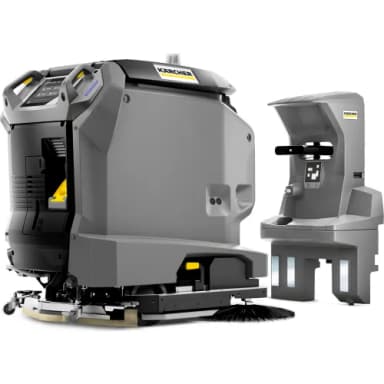 Kärcher KIRA B50 Autonomous scrubber | 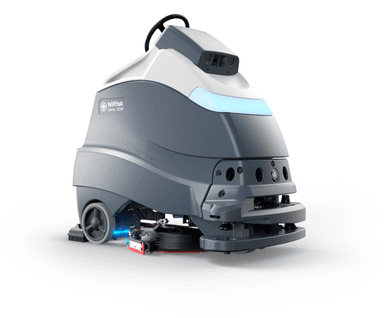 Nilfisk Liberty SC 50 Autonomous scrubber | 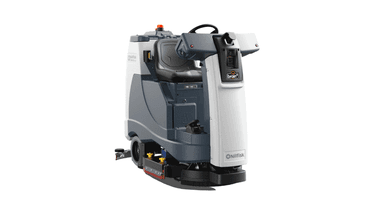 Nilfisk Liberty SC 60 Autonomous scrubber | 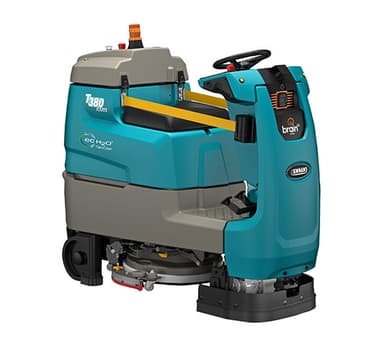 Tennant T380 AMR Autonomous scrubber |
|---|---|---|---|---|---|
| Dimensions | |||||
| Weight | 485 lbs / 220 kg | 628 lbs (285 kg) | 1,056 lbs (479 kg) | 1,102 lbs (500 kg) | 849 lbs (385 kg) |
| Cleaning Width | 20 in / 510 mm | 21.7 in (550mm, dual cylindrical) | 20.0 in (508mm, single disk pad) | 28.0 in (711mm, dual-disk brush) | 19.7 in (500mm, single disk brush) |
| Squeegee Width | 29 in / 740 mm | 29.5 in (750mm) | 30.2 in (767mm) | 32.6 in (829mm) | 29.5 in (750mm) |
| Cleaning Performance | |||||
| Max Cleaning Rate | Up to 27,641 ft²/hr manufacturer rated | 25,462 ft²/hr (2,365 m²/h) | 20,839 ft²/hr (1,936 m²/h) | 30,258 ft²/hr (2,811 m²/h) | 33,434 ft²/hr (3,106 m²/h) |
| Solution Tank | 14.5 gal / 55 L | 14.5 gal (55 L) | 15.1 gal (57 L) | 26.2 gal (99 L) | 19.8 gal (75 L) |
| Recovery Tank | 14.5 gal / 55 L | 14.5 gal (55 L) | 14.0 gal (53 L) | 27.5 gal (104 L) | 19.8 gal (75 L) |
| Movement | |||||
| Max Speed | 3.13 mph / 1.4 m/s | 2.7 mph (1.2 m/s) | 2.2 mph (1.0 m/s) | 2.5 mph (1.1 m/s) | 3.8 mph (1.7 m/s, manual) |
| Power & Battery | |||||
| Battery Type | Lithium iron phosphate (LFP), 120 Ah / 24 V DC | LFP | AGM/GEL | AGM | Flooded Lead Acid |
| Operating Sound | |||||
| Sound Level | ≥67 dB(A) | 69 dB(A) | 63 dB(A) | >57 dB(A) | >66 dB(A) |
| AI & Navigation | |||||
| LiDAR | 32-beam 3D LiDAR | 2D (~30 m) | 2D (25 m) | 2D (25 m) | 2D (25 m) |
| View L50 Details Book a Demo | Talk Through Alternatives | Talk Through Alternatives | Talk Through Alternatives | Talk Through Alternatives | |
CenoBots L50 vs Kärcher KIRA B50
These two models sit closest in buyer intent. Both target autonomous scrubbing, but their published dimensions, specifications, equipment options, and commercial proposals differ.
Compare the published robot prices, route clearances, support equipment, and final proposal scope with procurement, operations, and finance together.
CenoBots L50 vs Nilfisk Liberty SC 50 and SC 60
Compare the SC 50 and SC 60 published dimensions, operating model, proposal scope, and documented site requirements with the L50.
For a Nilfisk Liberty SC 50 alternative or SC 60 alternative, compare published cleaning performance, dimensions, deployment scope, and quoted cost directly.
CenoBots L50 vs Tennant T380 AMR
For a Tennant T380 AMR alternative, compare published specifications, measured route performance, support equipment, and the complete commercial proposal.
The L50 fields shown here are published product specifications; validate route requirements and equipment scope in a live demo.
Pricing and commercial model, what buyers should compare next
Searchers comparing autonomous scrubbers often move from product fit to commercial structure almost immediately. Compare whether to buy, lease, or use a service model, together with its documented support terms.
Compare the robot price with deployment, support, maintenance, and financing terms in the complete proposal.
Compare term length, monthly payment, end-of-term ownership, service scope, and total quoted payments.
Compare the uptime, service, and budget terms documented in the proposal.
Facility factors to validate for the L50
- • Measure the nightly floor area and compare it with published productivity
- • Confirm dimensions, passable width, and turn-around width on the actual route
- • Buyers comparing published autonomy, dimensions, weight, and robot price
- • Teams comparing demo, commercial, and local support scope
Competitor proposal review
Compare each competitor's published specifications, proposal scope, and documented site requirements before deciding which models remain under consideration.
Comparison topics: price, route ownership, and support
This page addresses searches for Kärcher KIRA B50 alternative price, Tennant T380 AMR alternative, and commercial cleaning robot comparison with published specifications, price context, and support-scope questions.
Review each candidate's published specifications and proposal terms for the site.
For buyers who are already searching where can I demo a robotic scrubber before purchase?, a route review can validate turning clearance, water workflow, route recovery, training needs, and support-equipment compatibility.
| Buyer question | Direct answer | Best next click |
|---|---|---|
| Is the L50 a realistic KIRA B50 alternative on price? | Compare the published L50 robot price with the quoted KIRA B50 robot and deployment scope. | Review the cost model |
| How should buyers compare the L50 with Tennant or Nilfisk alternatives? | Compare published dimensions, route requirements, and the separately priced support equipment. | Compare L3 vs L4 vs L50 |
| How should buyers compare support after go-live? | Review the documented proposal terms for each candidate. | Review service-area information |
| What is the best alternative to Tennant robotic scrubbers for large facilities? | Compare the published L50 specifications and the separately priced CWS-01. Published capability: Auto refill, drain, charge and discharge. | Review large-area scrubber guide |
| Where can I demo a robotic scrubber before purchase? | Book a demo on the real route whenever possible. Validate turns, docking, refill workflow, route recovery, and staff handoff before procurement compares final pricing. | Schedule a route demo |
Price context
Compare the published robot price with the complete deployment and support proposal.
Route ownership
Compare the L50 tank specifications and dimensions with the measured route and shift requirements.
Best autonomous floor scrubber shortlist by facility type
Buyer comparisons should account for compact aisle coverage, nightly square footage, commercial structure, and local support after the pilot. Use this section to organize a warehouse, grocery store, healthcare campus, school, or large retail route evaluation.
| Facility type | L50 evaluation details | What to verify before quote approval |
|---|---|---|
| Warehouses and logistics centers | Compare tank specifications, docking requirements, and route timing. | Confirm aisle width, pallet staging behavior, route timing, and whether warehouse floor scrubber guidance points to L50 or compact alternatives. |
| Grocery and large retail | Validate open-floor route coverage and schedule requirements during a live evaluation. | Verify shelving ends, carts, seasonal displays, and whether the store needs a retail cleaning robot deployment path. |
| Schools, universities, and healthcare | Validate recurring corridors, commons areas, route handoff, and local support. | Confirm noise expectations, safety zones, elevator workflow, and whether the buyer needs local support in Minnesota, Wisconsin, or Iowa. |
| Facilities comparing monthly deployment models | Compare the robot and support model together in the final proposal. | Compare purchase, lease-to-own, and commercial cleaning robot RaaS before choosing the lowest monthly number. |
FAQ
Frequently asked questions about the L50 and competitor shortlist
What is the biggest difference between the CenoBots L50 and Tennant T380 AMR?
Compare the published robot specifications, support-equipment options, and operating model, then confirm each proposal's full scope.
Is the CenoBots L50 a real alternative to Kärcher KIRA B50?
Yes. Buyers can compare the published dimensions, cleaning output, robot price, support equipment, and proposal scope for larger commercial routes.
How should buyers compare the Nilfisk Liberty SC 60 with the L50?
Compare the SC 60 published dimensions and cleaning width with the L50 values, then review each proposal and documented site requirements.
Should buyers compare price, lease, and RaaS options separately from the robot specs?
Yes. Compare deployment, training, software, support, and workstation hardware as separate proposal terms alongside the robot specifications.
Which autonomous floor scrubber brand should buyers shortlist first?
Review the published specifications and proposal terms for each candidate against the site requirements.
Compare the full CenoBots lineup
Still deciding whether the L50 is the right size class? Compare the L3, L4, and L50 side by side before you commit to a demo path.
View CenoBots ComparisonTalk through your facility
If you are already comparing shortlist candidates, the next step is a route review and live demonstration.
Book a DemoReady to pressure-test the shortlist?
Request a site assessment to compare route fit, pricing model, support scope, and shortlisted machines.