Competitor Comparison
CenoBots L3 vs Gausium Mira
If you are searching for a Gausium Mira alternative, this is the practical buyer view. Mira is interesting when the no-pre-sweep story matters. The CenoBots L3 is usually the stronger compact commercial fit when you want dedicated scrubber output, larger tanks, deeper autonomy, and a cleaner path to ROI for healthcare, education, senior living, and retail routes.
Choose the L3 if route reliability matters most
The L3 usually wins when buyers need a compact robot that behaves like production equipment instead of a clever compromise.
Choose Mira only if the debris story is truly valuable
Mira is most interesting when your team has lighter debris, wants less pre-sweeping, and accepts that all-in-one capacity usually stays limited.
Compare interruptions, not just features
Late-stage buyers are usually deciding how much labor remains around refill, debris emptying, navigation recovery, and nightly supervision.
CenoBots L3
$24,000 MSRP guidance
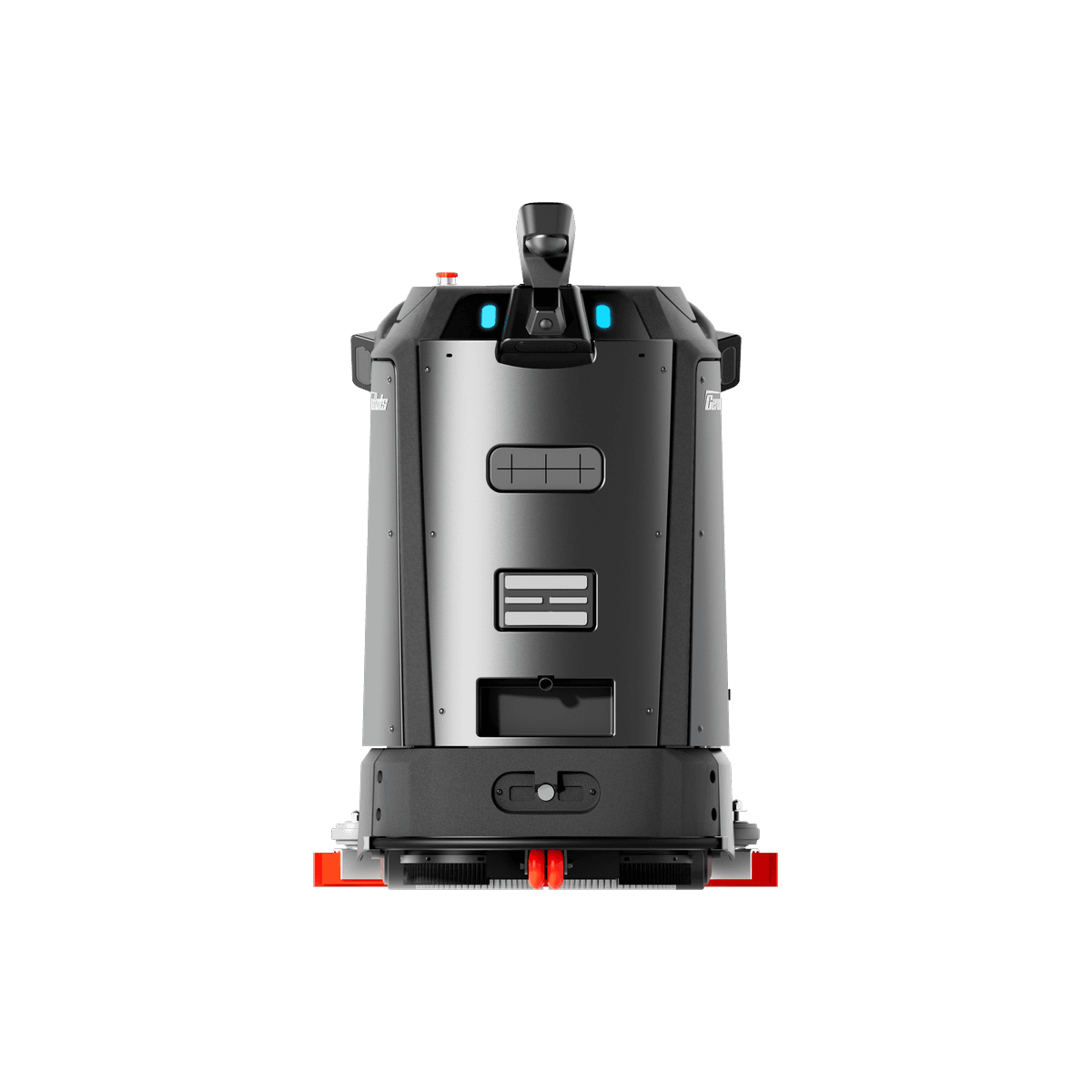
Best for: Compact commercial routes where buyers want dedicated scrubber performance, larger onboard tanks, and stronger autonomy for real nightly cleaning.
- Published customer-facing MSRP guidance gives operations and finance an earlier budgeting path
- 6.6 gal / 25 L solution and 6.6 gal / 25 L recovery tanks support longer unattended runs than many all-in-one compact alternatives
- 128-beam 3D LiDAR, NVIDIA AI chip (100 TOPS), plus optional WS3 (Automatic water refill, detergent fill, water drain, and charge) and TS3 (Fixed fill and drain point) fit healthcare, education, senior living, and retail routes
Gausium Mira
Quote-based / varies by market
Best for: Buyers drawn to a newer scrubber-first robot with added debris handling so they can reduce pre-sweeping on lighter-duty routes.
- Attractive all-in-one buyer story for teams trying to combine light debris pickup and scrubbing in one chassis
- Published debris chamber guidance is around 4 L, which is useful context for buyers evaluating real route practicality
- Best pressure-tested on lighter-maintenance environments before assuming it can replace a dedicated scrubber and sweeper workflow
Fast-answer buyer comparison
This is the commercial shortlist view, not a feature dump.
| What matters | CenoBots L3 | Gausium Mira |
|---|---|---|
| Price posture | $24,000 MSRP guidance | Quote-based / market dependent |
| Best fit | Healthcare corridors, schools, senior living, retail, office buildings, mixed-use facilities | Light-maintenance routes where buyers want to reduce pre-sweeping and accept all-in-one capacity tradeoffs |
| Cleaning posture | Dedicated scrubber-first platform with larger onboard water capacity and stronger compact-route productivity | Scrubber-first platform with added debris handling convenience, but buyers should validate how quickly the small debris chamber fills |
| Autonomy workflow | 128-beam 3D LiDAR, NVIDIA AI chip (100 TOPS), plus optional WS3 (Automatic water refill, detergent fill, water drain, and charge) and TS3 (Fixed fill and drain point) | Newer all-in-one workflow story that still needs route-level validation for interruptions, debris, and daily supervision |
| Main buyer advantage | Better compact scrubber value path for teams prioritizing dependable nightly production | Useful if avoiding a separate pre-sweep step matters more than maximum dedicated scrubber output |
Why buyers compare the L3 against Mira
Buyers searching for Gausium Mira alternative or CenoBots L3 vs Gausium Mira are usually not asking a generic robotics question. They are trying to decide whether the convenience of an all-in-one scrubber with light debris handling is worth the tradeoffs in capacity, interruptions, and route realism.
That is why the L3 often stays strong on the shortlist. It is a dedicated compact autonomous scrubber with larger onboard water capacity, a stronger navigation stack, and a clearer budget starting point. Teams that need a robot to finish meaningful nightly scrubbing in clinics, schools, senior living, retail, or office corridors often prefer that predictability over an all-in-one promise.
Mira is still worth a serious look when reducing a pre-sweep step is the core buying driver. But buyers should validate real debris load, emptying frequency, and whether a published debris chamber around 4 liters is enough for the route they actually want the robot to run.
Quick shortlist rule
- • Choose the L3 when scrubber output, autonomy depth, and ROI clarity matter most.
- • Keep Mira in play only if light debris pickup convenience materially changes your workflow.
- • Pressure-test debris emptying, refill cadence, and obstacle recovery before assuming one robot can replace multiple cleaning steps cleanly.
Dedicated scrubber vs all-in-one tradeoff
The all-in-one category is attractive because it promises to reduce process complexity. In lighter-duty buildings, that can be useful. But once a robot tries to handle both debris and wet cleaning in one compact chassis, buyers usually run into the same question: how much real capacity remains before the route stops being practical?
That is where the L3 has an easier commercial story. It does not need to pretend to be every machine at once. It is built to scrub well, run longer, and fit tighter facilities without asking buyers to absorb as many compromise points around debris storage, mode assumptions, and operator intervention.
If your site creates steady dry debris, it is worth comparing whether a dedicated scrubber plus a separate sweeper or manual pre-sweep is actually the lower-friction operating model over a full year.
Where the L3 usually wins
Healthcare corridors, senior living common areas, schools, grocery perimeter loops, and office routes where compact size still needs meaningful nightly scrubber coverage.
Where Mira may stay interesting
Lighter-maintenance routes where avoiding a separate pre-sweep step matters more than maximum unattended runtime or heavy daily scrub performance.
What buyers should verify
Debris volume, route length, refill access, and how often staff still need to touch the machine between runs after the demo is over.
Best next step if you are close to a buying decision
If your team is narrowing a shortlist now, compare this page with the full L3 competitor guide, the CenoBots L3 review and pricing breakdown, and our autonomous scrubber ROI guide.
That sequence keeps product fit, budget, and route-level labor math connected before procurement locks in an all-in-one concept that may be better in a demo than in production.
Gausium Mira Alternative FAQ
Common buyer questions about route fit, all-in-one tradeoffs, and compact scrubber value.
What is a good Gausium Mira alternative?
The CenoBots L3 is a strong Gausium Mira alternative for buyers who want a dedicated compact autonomous scrubber with clearer MSRP guidance, larger onboard water capacity, and a more predictable nightly scrubbing workflow.
How does the CenoBots L3 compare with the Gausium Mira?
The biggest difference is usually workflow philosophy. The L3 is a dedicated scrubber-first platform built around dependable compact-route production. The Mira is more interesting for buyers who value the no-pre-sweep story and are willing to validate the debris-capacity tradeoff carefully.
When does the Gausium Mira still make sense?
The Mira can stay on the shortlist when debris pickup convenience matters, floor conditions are lighter, and the route is small enough that a roughly 4 L debris chamber and all-in-one tradeoffs are still operationally acceptable.
Who should choose the CenoBots L3 over the Mira?
The L3 is usually the better fit for healthcare, schools, senior living, retail, and mixed-use facilities that need a compact robot to finish meaningful scrubber work with fewer interruptions and a cleaner ROI path.
Can Sproutmation help compare both robots using our building data?
Yes. Sproutmation can review route width, floor area, debris level, cleaning frequency, labor pressure, and support expectations so your team compares the L3 and Mira on real deployment conditions instead of brochure language alone.