Buyer Intent Guide
CenoBots L4 vs Kärcher, Nilfisk, and Tennant: Mid-Size Scrubber Comparison
If your team is searching for CenoBots L4 price, CenoBots L4 vs Kärcher, or the best autonomous floor scrubber for a medium-size facility, this page presents published L4 fields alongside competitor facts for a route-specific review.
Evaluation section
How to evaluate the CenoBots L4 shortlist
Review the L4's published price, tank capacities, runtime, productivity, and route dimensions alongside the competitor facts below.
Published L4 information to review
- A published price available to signed-in users
- Published route and cleaning specifications for site review
- Published availability and runtime fields
- A direct comparison point for competitor demonstrations
Proposal details to verify
- Required procurement standards and approved vendors
- Tank capacity and machine dimensions for the measured route
- Service scope, operator responsibilities, and support terms
- Deployment configuration and separately priced support equipment
Mid-size autonomous scrubber shortlist
This is the buyer-safe comparison view. Use it to narrow the right conversations before you request demos or quotes.
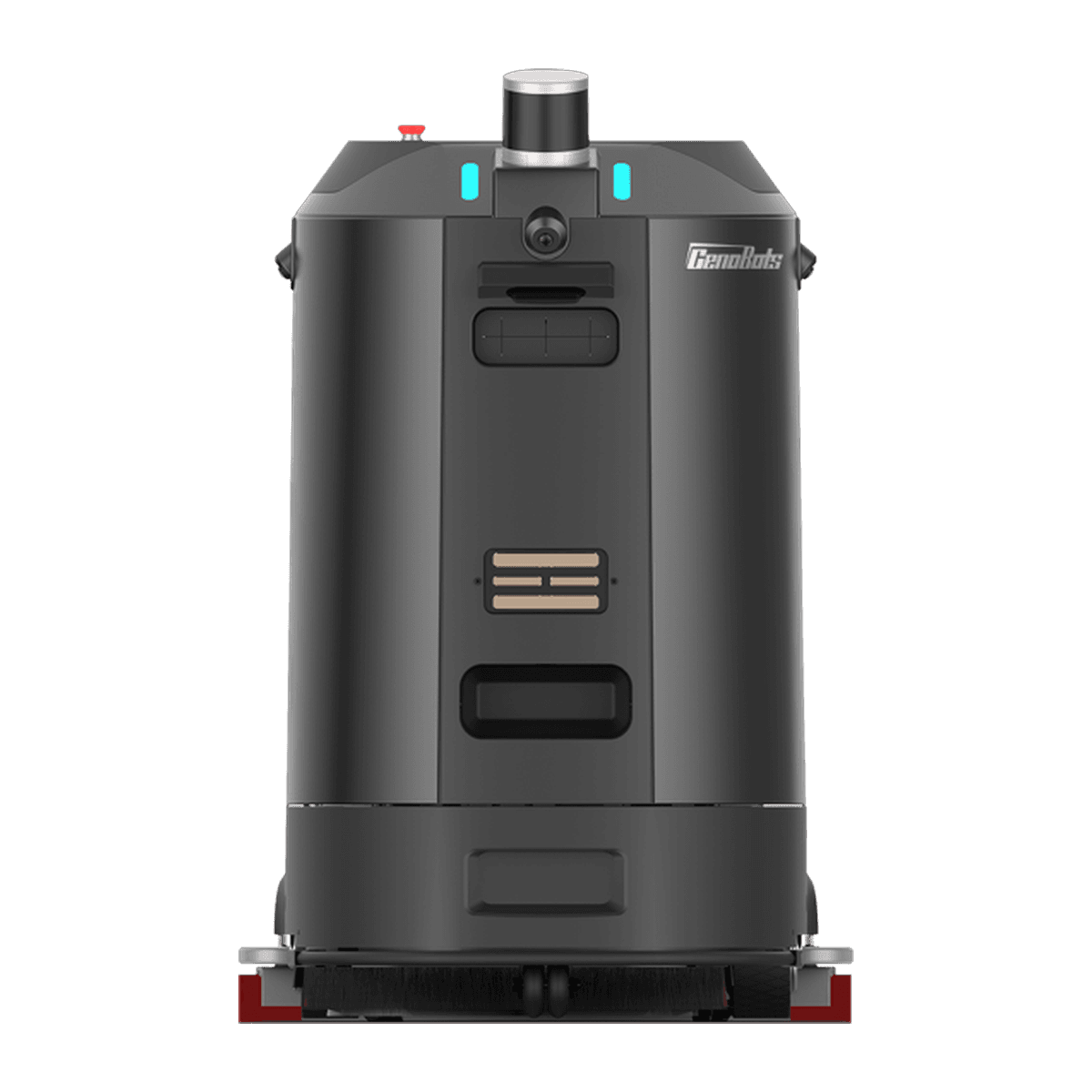
CenoBots L4
In stock
Runtime: 4.5 hours
Manufacturer productivity
Up to 24,384 ft²/hr manufacturer rated
RFM productivity
5,800–6,500 ft²/hr real-world expectation from RFM fleet telemetry (rfm.sproutmation.com) (Hospitals and clinics)
Sound: ≥66 dB(A)
Navigation: 32-beam 3D LiDAR, 3D depth camera, Bumper sensor, IMU
Solution tank: 10 gal / 38 L
Recovery tank: 9.5 gal / 36 L
Verify the published specifications against the measured route and operating workflow.
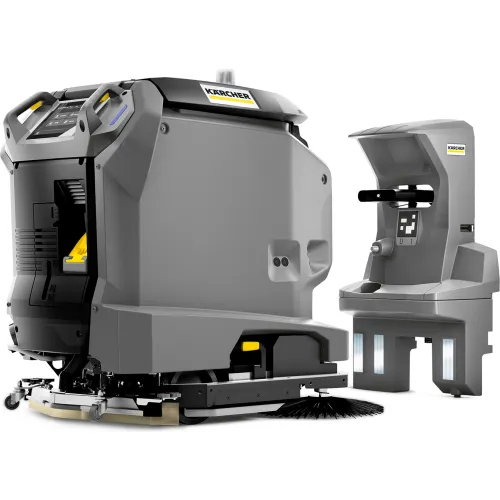
Kärcher KIRA B 50
~$74,000 MSRP
Best for: Buyers standardized on the Kärcher ecosystem who accept a larger commercial budget
Navigation: 2D LiDAR + depth camera, teach-and-repeat oriented
Tank: 55 L solution / 55 L recovery
Productivity: 25,462 sq ft/hr
More expensive and physically larger than the L4, so it is usually shortlisted when brand standardization matters more than price efficiency or tighter-route fit.
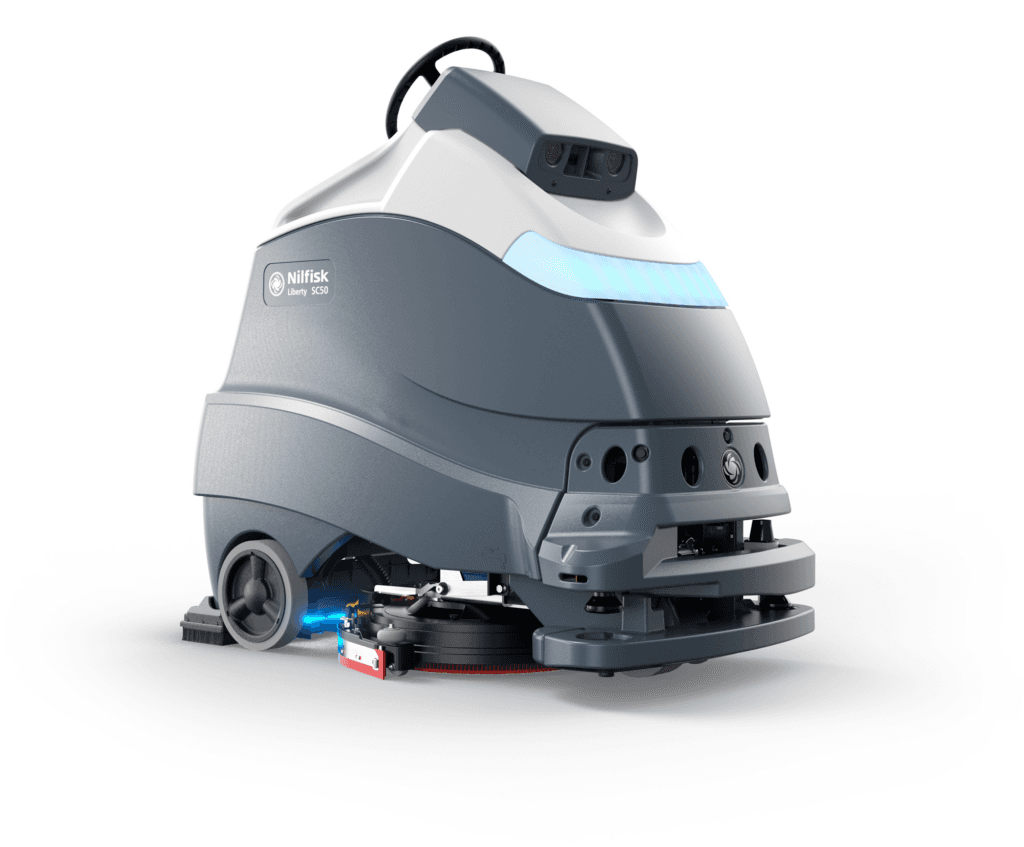
Nilfisk Liberty SC50
Quote-based
Best for: Facilities already committed to Nilfisk service and procurement channels
Navigation: 2D LiDAR + 3D depth camera
Tank: 57 L solution / 53 L recovery
Productivity: 20,839 sq ft/hr
A known enterprise option, but buyers should verify route upkeep, operator touch points, and support expectations before comparing on sticker alone.
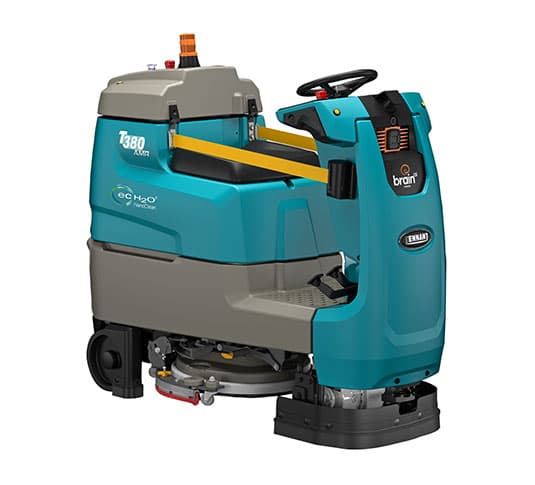
Tennant T380 AMR
Quote-based
Best for: Enterprise buyers who prefer Tennant and want a recognizable AMR program
Navigation: LiDAR + vision-based autonomous route operation
Tank: Configuration-dependent
Productivity: Varies by route and setup
Often evaluated by facilities teams already familiar with Tennant scrubbers, but commercial buyers still need to compare route fit, support, and total deployment friction.
Optional L4 support equipment
Compatible workstation model
CWS-01
Published capability
Auto refill, drain, charge and discharge
Separately priced accessory
Side-by-side buyer guidance
| Comparison point | L4 | KIRA B50 | SC50 | T380 AMR |
|---|---|---|---|---|
| Comparison position | Published mid-size CenoBots model | Premium shortlist if Kärcher standardization matters | Enterprise shortlist if Nilfisk is already approved | Enterprise shortlist if Tennant is already approved |
| Pricing posture | Published MSRP | Published MSRP | Quote-based | Quote-based |
| Published or stated use context | Verify the proposed route through a site assessment | Larger open commercial sites with higher budget tolerance | Institutional and enterprise cleaning programs | Institutional and enterprise cleaning programs |
| Why buyers pick it | Published MSRP and direct product specifications | Large tank, known brand, workstation-ready story | Existing vendor relationship and procurement familiarity | Existing vendor relationship and AMR recognition |
| Watch-outs | Validate route geometry and workflow during a site review | Higher price and larger footprint than many mid-size buyers need | Verify support scope, route upkeep, and deployment burden | Verify support scope, route upkeep, and deployment burden |
CenoBots L3
Manufacturer productivity
Up to 21,674 ft²/hr manufacturer rated
RFM productivity
4,800–7,200 ft²/hr real-world expectation from RFM fleet telemetry (rfm.sproutmation.com) (Shopping mall)
Compare its published specifications with the measured route; this is not a facility recommendation.
CenoBots L4
Use the published L4 specifications on this page as inputs to a site assessment and proposal review.
CenoBots L50
Manufacturer productivity
Up to 27,641 ft²/hr manufacturer rated
RFM productivity
5,800–8,200 ft²/hr real-world expectation from RFM fleet telemetry (rfm.sproutmation.com) (Hospitals, Large grocery and warehouse, Large factory and warehouse, K-12 schools, University)
Compare its published specifications with the measured route; this is not a facility recommendation.
Next evaluation steps
See the Kärcher KIRA B 50 alternative page
Review published L4 specifications alongside the stated KIRA B 50 facts.
Book a live demo
Provide the route, floor types, and cleaning windows for site-specific evaluation.
Review Robot-as-a-Service
Compare the proposed commercial structure and support responsibilities.
Read the ROI guide
Use the linked planning framework after route fit has been validated.
Compare the full lineup
Review CenoBots L3, CenoBots L4, and CenoBots L50 published specifications side by side.
Review the L4 product page
Review the published L4 specifications before a proposal evaluation.
Review the L50 product page
Compare the published L50 and L4 specifications without inferring facility fit.
Frequently asked questions
What is the CenoBots L4 price?
Sign in to view the published CenoBots L4 price, or request a proposal for current project pricing. Accessories, onboarding, and support scope should be quoted separately.
How should buyers evaluate the CenoBots L4?
Compare the L4's published passage width, cleaning width, tank capacities, runtime, and productivity against the planned route and cleaning schedule.
How does the CenoBots L4 compare with Kärcher, Nilfisk, or Tennant?
Use the published product specifications and competitor facts in this page, then validate route and service requirements during a live evaluation.
What is the difference between the L4 and the L50?
Compare the published L4 and L50 specifications on the full CenoBots comparison page, then verify the required capacity, dimensions, and route conditions through a site assessment.
Can the CenoBots L4 be deployed through RaaS?
RaaS availability, commercial structure, support coverage, and rollout responsibilities must be confirmed in a current project proposal.
Want the right answer for your route, not just a comparison page?
We'll compare the published specifications with your route and arrange a live evaluation.