Competitor Comparison
CenoBots L50 vs Avidbots Neo
If you are searching for an Avidbots Neo alternative, this is the buyer-focused answer. Neo stays relevant when enterprise brand familiarity or incumbent standardization matters. The CenoBots L50 has customer-facing price guidance and an optional service workflow for buyers evaluating a high-capacity scrubber.
Evaluate the L50 service workflow
The L50 has customer-facing MSRP guidance and a separately priced service accessory. Buyers should validate charging, refilling, recovery, and operator involvement during a live evaluation.
Keep Neo in play if enterprise standardization matters first
If your organization already buys through an Avidbots-aligned path or wants to stay with a familiar incumbent brand, Neo can remain on the shortlist. Just validate the real support and workflow assumptions during a pilot.
Compare the support model, not just the robot
For large-route buyers, the post-sale service path often decides rollout success more than the spec sheet. Route optimization help, response time, and local accountability matter just as much as the machine itself.
CenoBots L50
$41,820 MSRP guidance
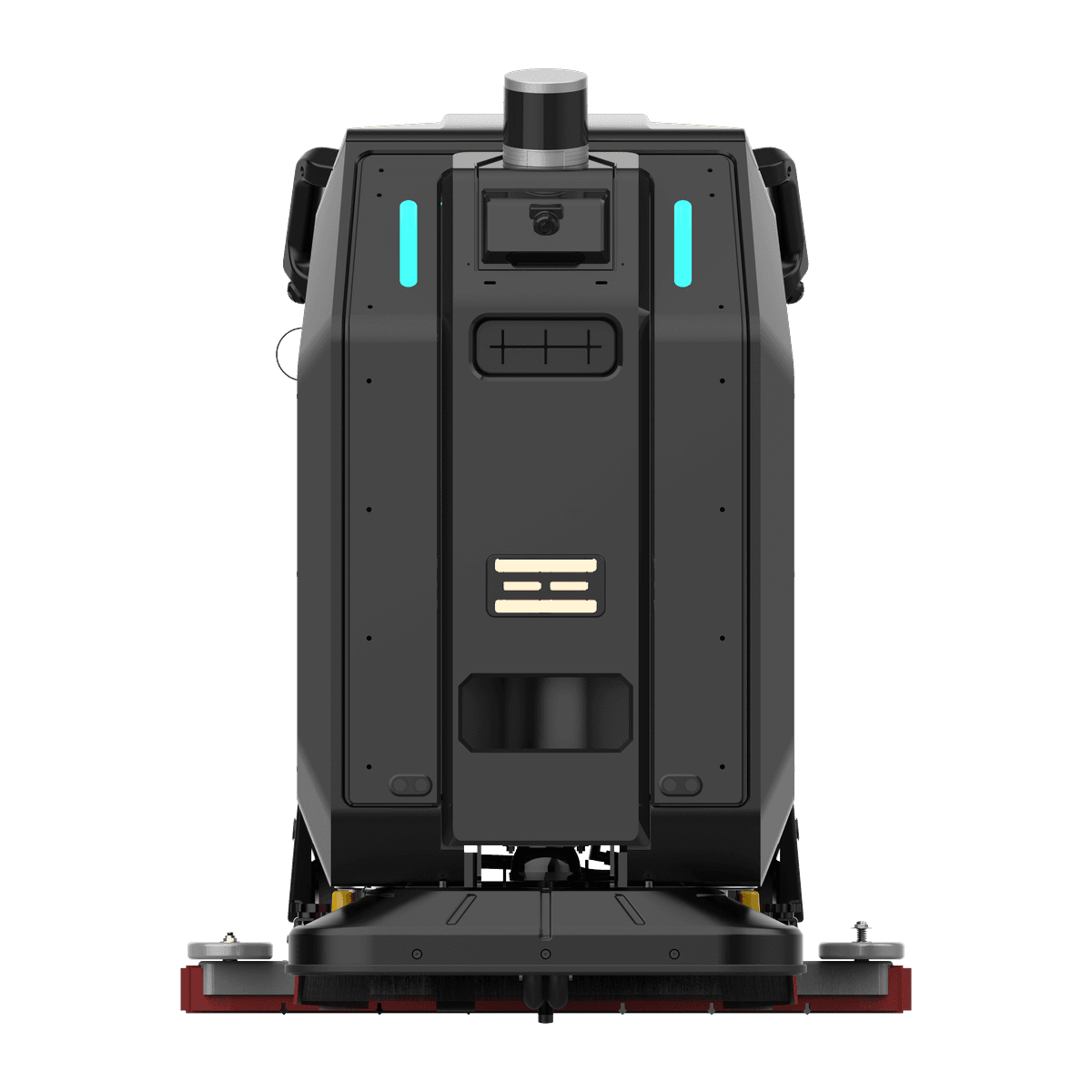
Best for: High-capacity scrubber for large open floors
- Published customer-facing MSRP guidance helps operations and finance teams budget earlier
- Tank capacities: 14.5 gal / 55 L solution and 14.5 gal / 55 L recovery tanks
- the separately priced CWS-01 accessory (Auto refill, drain, charge and discharge) supports the published service workflow when site utilities and scheduling are configured
Avidbots Neo
Quote-based
Competitor
Avidbots Neo
Best for: Facilities already aligned to Avidbots procurement or enterprise-standardization paths and comfortable validating the full support and workflow model through a live evaluation.
- Recognized enterprise autonomous scrubber in airports, retail, logistics, and public-space environments
- Often stays on the shortlist when incumbent brand familiarity or existing fleet standardization matters
- Best evaluated around full deployment workflow, route recovery, local support depth, and total operator touch points, not just route coverage claims
Fast-answer buyer comparison
This is the shortlist view, not a feature dump.
| What matters | CenoBots L50 | Avidbots Neo |
|---|---|---|
| Price posture | $41,820 MSRP guidance | Quote-based |
| Best fit | High-capacity scrubber for large open floors | Large public-floor environments where incumbent enterprise standardization is already a buying factor |
| Autonomy workflow | the separately priced CWS-01 accessory (Auto refill, drain, charge and discharge), with site utilities and scheduling, can reduce daily operator touch points | Validate the full deployment workflow, intervention frequency, and route recovery process during live evaluation |
| Support conversation | Local Midwest deployment, optimization, and service support from Sproutmation | Support experience depends heavily on channel structure, territory coverage, and how responsive the delivery path is after go-live |
| Main buyer advantage | Customer-facing MSRP guidance and an optional service workflow | Known enterprise badge for teams already committed to an Avidbots-oriented buying path |
Why buyers move away from an Avidbots-only shortlist
Most buyers searching for an Avidbots Neo alternative are already late in the evaluation. They are usually asking whether another robot can deliver the required large-route outcome with fewer manual touch points.
The L50 is positioned as a high-capacity scrubber for large open floors and has customer-facing price guidance plus an optional service-accessory path. Buyers should also evaluate how much labor still sits around charging, refill, route recovery, and support escalation after deployment.
That is where local support becomes part of the product. Buyers across the Upper Midwest often prefer a path where deployment help, optimization, and service are closer to the facility instead of abstracted behind a distant channel relationship.
Quick buying take
- Evaluate L50 when customer-facing price guidance, an optional service workflow, and local support matter.
- Keep Neo in play when your facility is already aligned to an Avidbots-oriented procurement or service ecosystem.
- Validate the support model by asking who handles optimization, intervention troubleshooting, and on-site follow-up after go-live.
Reasons to evaluate the L50
- You want a large-route robot with customer-facing MSRP guidance early in the buying process.
- You care about reducing operator work around charging, refill, route recovery, and support escalation.
- The published L50 positioning is “High-capacity scrubber for large open floors.”
- You want local deployment and optimization support instead of a purely remote relationship after rollout.
Where Neo can still make sense
- Your organization already standardizes on Avidbots procurement, service relationships, or enterprise contracts.
- The facility team has already validated the pilot workflow and is comfortable with the intervention pattern.
- Brand continuity matters more to the buying group than earlier MSRP visibility or a different local support path.
FAQ
Questions buyers ask before choosing Neo or L50
Late-stage buyer questions we hear from teams comparing CenoBots and Avidbots.
What is a good Avidbots Neo alternative?
The CenoBots L50 is an Avidbots Neo alternative with customer-facing price guidance and the separately priced CWS-01 accessory (Auto refill, drain, charge and discharge) for an optional service workflow with local support for Upper Midwest deployments.
How much does the Avidbots Neo cost compared with the CenoBots L50?
The CenoBots L50 is shown with customer-facing $41,820 MSRP guidance on this comparison path. Avidbots Neo pricing is usually quote-based, so buyers should compare support coverage, deployment workflow, and total operator involvement instead of waiting to evaluate only after a quote appears.
Who should choose the CenoBots L50 over the Avidbots Neo?
Published L50 positioning: High-capacity scrubber for large open floors. Buyers should validate daily operator touch points and local deployment support during evaluation.
When does the Avidbots Neo still make sense?
Neo can still make sense when the organization is already standardized on that buying path, the pilot confirms the workflow fits the staffing model, and the support channel is already trusted by the facility team.
Can Sproutmation compare both robots using our building data?
Yes. Sproutmation can review square footage, route width, cleaning schedule, staffing pressure, service expectations, and support geography so your team can compare the L50 and Neo on the operational factors that actually decide rollout success.
Keep Comparing
More ways to shortlist the right autonomous scrubber
Use the compare hub, the full L50 competitor guide, or our RaaS path if monthly budget and service responsibility are part of the decision.
Compare hub
See the full CenoBots lineup plus deeper competitor pages for compact, mid-size, and large-route buyers.
Full L50 competitor guide
Keep comparing the L50 against Tennant, Nilfisk, and Kärcher pages built for larger-format commercial routes.
Explore RaaS options
If capex timing is the blocker, review Robot-as-a-Service options before you rule out the better-fit machine.