Competitor Comparison
CenoBots L50 vs Gausium Scrubber 50
If you are searching for a Gausium Scrubber 50 alternative, this is the buyer-focused answer. The Scrubber 50 stays relevant when a broader enterprise pilot or existing platform familiarity matters. The CenoBots L50 has customer-facing price guidance and an optional service workflow for buyers evaluating a high-capacity scrubber.
Evaluate the L50 service workflow
The L50 has customer-facing MSRP guidance and a separately priced service accessory. Buyers should validate staffing and operator involvement during a live evaluation.
Keep the Gausium Scrubber 50 in play if your team wants a side-by-side pilot
If your facility group already knows the Gausium platform or wants to compare multiple enterprise autonomous scrubbers before standardizing, the Scrubber 50 can still stay on the shortlist.
Compare the whole deployment workflow, not just the machine class
For late-stage buyers, the real question is how much manual work remains after the robot is on site. Charging, refill, route recovery, and local support usually decide rollout success faster than brochure claims.
CenoBots L50
$41,820 MSRP guidance
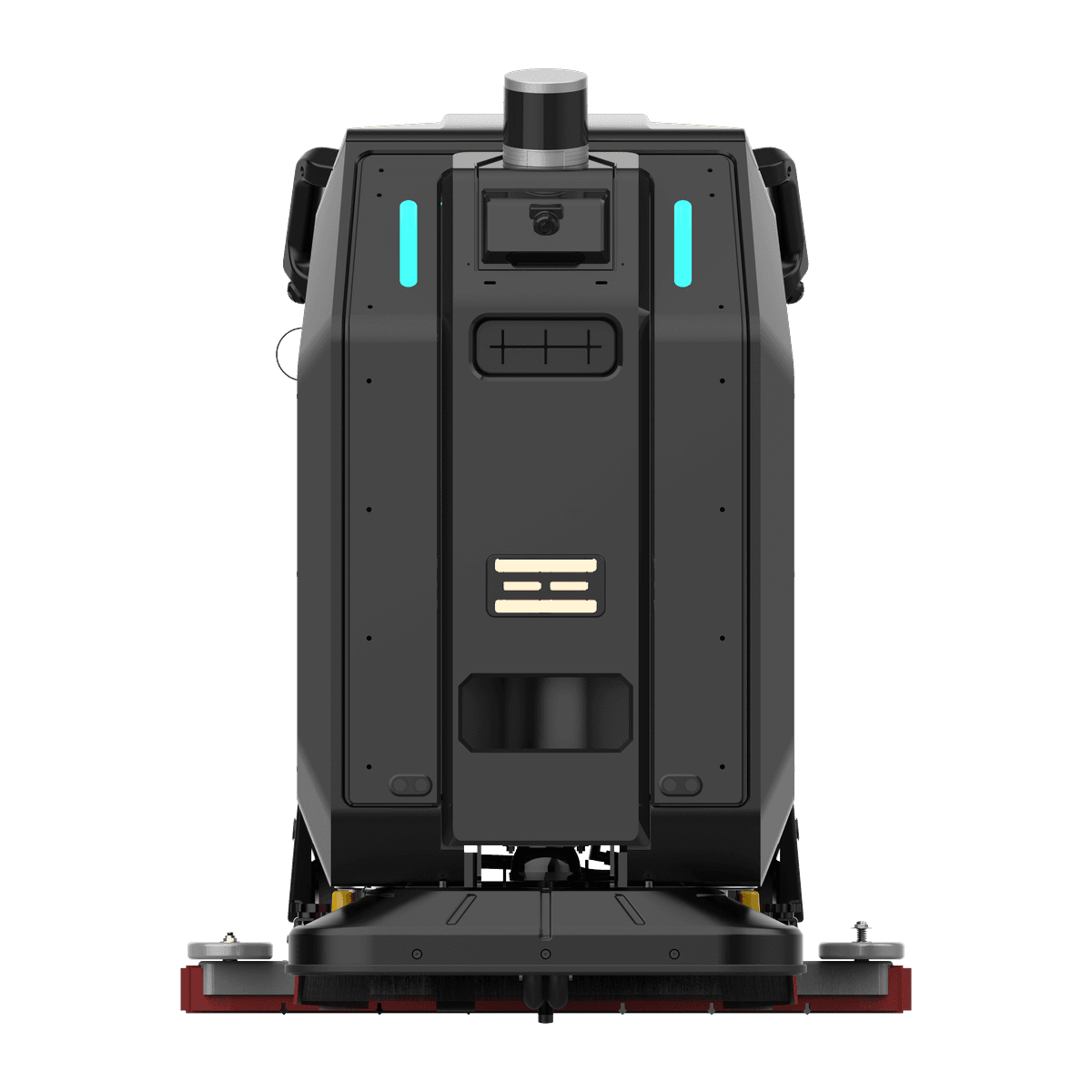
Best for: High-capacity scrubber for large open floors
- Published customer-facing MSRP guidance helps finance and operations budget before the quote process slows the project down
- the separately priced CWS-01 accessory (Auto refill, drain, charge and discharge) supports the published service workflow when site utilities and scheduling are configured
- More floor per hour, with a machine built to keep going.
Gausium Scrubber 50
Quote-based
Competitor
Gausium Scrubber 50
Best for: Facilities that already prefer the Gausium ecosystem or want to validate another large-route autonomous scrubber during a structured pilot.
- Recognized large-format autonomous scrubber option for open commercial, logistics, transit, and institutional floor plans
- Can stay on the shortlist when incumbent procurement preferences or global brand familiarity already point in that direction
- Best evaluated around total deployment friction, refill behavior, route recovery, service response, and day-two support, not just brochure positioning
Fast-answer buyer comparison
This is the commercial shortlist view, not a feature dump.
| What matters | CenoBots L50 | Gausium Scrubber 50 |
|---|---|---|
| Price posture | $41,820 MSRP guidance | Quote-based |
| Best fit | High-capacity scrubber for large open floors | Open facilities evaluating a large-route autonomous scrubber alongside other enterprise cleaning platforms |
| Autonomy workflow | the separately priced CWS-01 accessory (Auto refill, drain, charge and discharge), with site utilities and scheduling, can reduce daily operator touch points | Autonomous route operation should be validated for charging, refill, recovery, and intervention burden during a pilot |
| Support conversation | Local Midwest deployment, route optimization, training, and service support from Sproutmation | Support quality depends on local channel coverage, implementation follow-through, and post-sale responsiveness |
| Main buyer advantage | Customer-facing MSRP guidance and an optional service workflow | Useful when buyers want another global large-route platform on the shortlist before making a final call |
How should buyers compare these robots?
Buyers searching for a Gausium Scrubber 50 alternative can evaluate the CenoBots L50 using its customer-facing MSRP guidance, optional service path, and local support model. The Gausium Scrubber 50 can still stay on the shortlist, but it should win only if the pilot proves the workflow and support path fit your operation better.
Deployment fit
- L50: High-capacity scrubber for large open floors.
- Gausium Scrubber 50: Open commercial routes where the buying team wants to pilot another enterprise autonomous scrubber and validate support depth first.
- Shortlist tip: Compare refill interruptions, route recovery, support responsiveness, and how much operator work remains between shifts.
What late-stage buyers should verify before choosing either robot
Large-route autonomous scrubber projects usually succeed or fail on the handoffs around the robot, not the route map alone. Ask each vendor to show what happens before the run, after the run, and when the route breaks.
That means looking at refill steps, operator supervision, how exceptions get resolved, who owns route optimization, and whether your local team can get real deployment help after the sale. Buyers who do that homework usually get to a cleaner answer faster than teams comparing headline throughput alone.
Check support depth
Make sure the same team selling the project can also help with route tuning, training, and service escalation after launch.
Check the night-shift workflow
Validate how much human intervention remains between runs if your goal is consistent overnight cleaning with fewer labor bottlenecks.
FAQ
Gausium Scrubber 50 alternative FAQ
What is a good Gausium Scrubber 50 alternative?
The CenoBots L50 is a Gausium Scrubber 50 alternative with customer-facing MSRP guidance and the separately priced CWS-01 accessory (Auto refill, drain, charge and discharge) for an optional service workflow with local support for Upper Midwest deployments.
How much does the Gausium Scrubber 50 cost compared with the CenoBots L50?
The CenoBots L50 is shown with customer-facing $41,820 MSRP guidance on this comparison path. Gausium Scrubber 50 pricing is usually quote-based, so buyers should compare workflow, support coverage, and total operator involvement instead of waiting to evaluate only after a quote appears.
Who should choose the CenoBots L50 over the Gausium Scrubber 50?
Published L50 positioning: High-capacity scrubber for large open floors. Buyers should validate daily operator touch points and site requirements during evaluation.
When does the Gausium Scrubber 50 still make sense?
The Gausium Scrubber 50 can still make sense when the organization wants to run a broader enterprise pilot, the workflow fits the staffing model, and the local support path is already trusted by the facility team.
Can Sproutmation compare both robots using our building data?
Yes. Sproutmation can review square footage, route width, shift timing, labor pressure, service expectations, and support geography so your team can compare the L50 and Gausium Scrubber 50 on the operational factors that actually decide rollout success.