Competitor Comparison
CenoBots L3 vs LionsBot R3 Scrub
If you are searching for a LionsBot R3 Scrub alternative, this is the practical buyer view. The R3 Scrub stays in the conversation when ultra-compact size is the headline requirement. The CenoBots L3 is usually the stronger compact commercial fit when you want better scrubber output, larger tanks, deeper autonomy, and a cleaner path to ROI for healthcare, education, retail, and senior living routes.
Choose the L3 if route coverage and autonomy depth matter more than footprint alone
The L3 usually wins when buyers need a compact robot that can still cover meaningful square footage with fewer refills, stronger scrubbing, and less operator babysitting.
Choose R3 Scrub if your team values ultra-compact size first
The R3 Scrub stays in the conversation when the route is tight, the cleaning window is lighter, and the team values a smaller machine with touchscreen-led operation.
Compare nightly execution, not just brochure friendliness
Late-stage buyers should pressure-test refill interruptions, practical route speed, docking behavior, and obstacle recovery, because those decide whether the robot reliably replaces repetitive labor.
CenoBots L3
$24,000 MSRP guidance
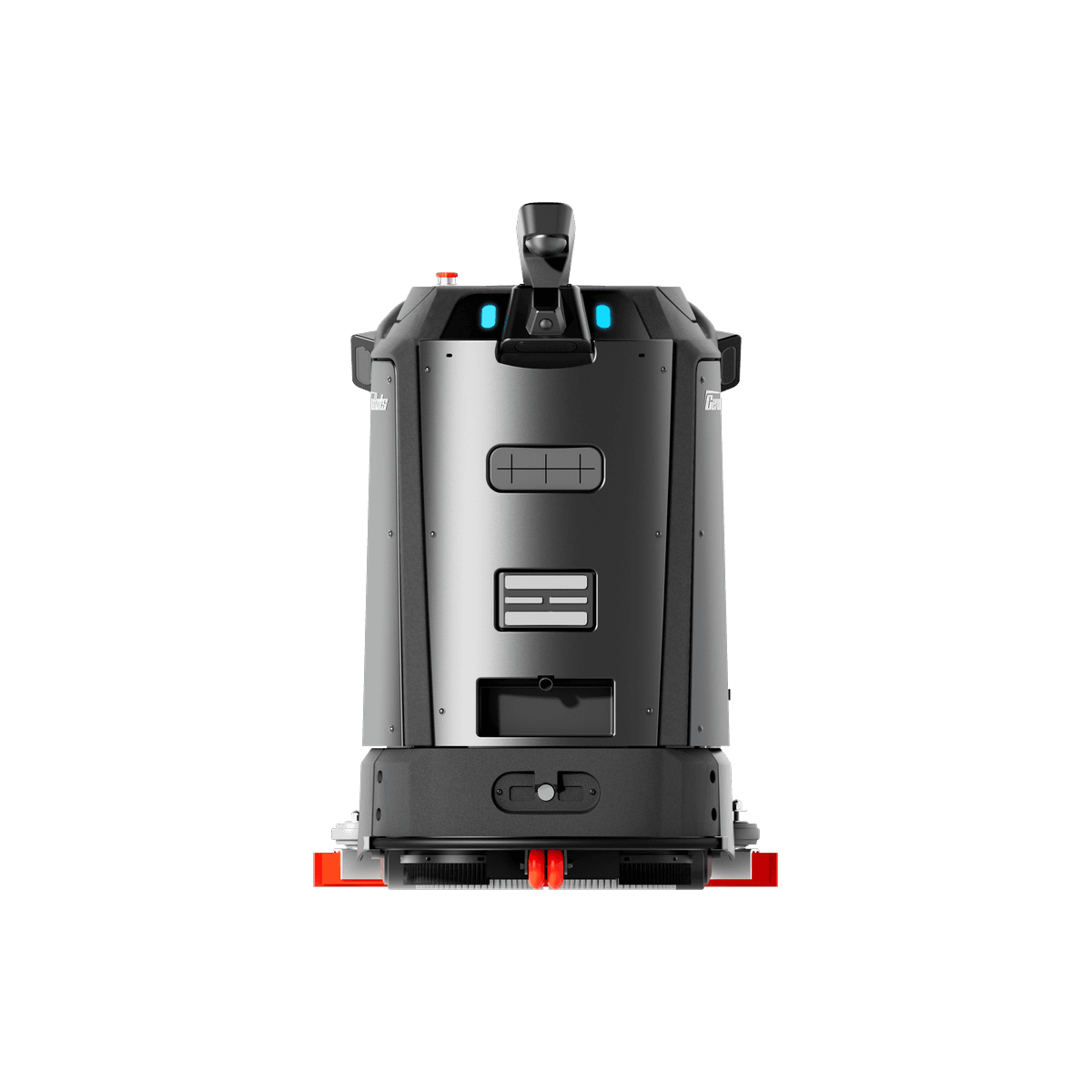
Best for: Compact commercial routes where buyers want stronger scrub-first performance, larger tanks, and deeper autonomy for real nightly cleaning.
- Published customer-facing MSRP guidance helps operations and finance budget earlier
- 6.6 gal / 25 L solution and 6.6 gal / 25 L recovery tanks for longer unattended runs than many compact alternatives
- 128-beam 3D LiDAR, NVIDIA AI chip (100 TOPS), plus optional WS3 (Automatic water refill, detergent fill, water drain, and charge) and TS3 (Fixed fill and drain point) for healthcare, education, retail, and senior living routes
LionsBot R3 Scrub
Quote-based
Best for: Buyers who want a very compact scrubber and like the touchscreen-plus-app operating model, while accepting lighter onboard capacity and lower practical scrub throughput.
- Very compact physical footprint with scrub and dust-mop workflow messaging
- Published around 21 L clean water and 24 L waste water capacity with up to 3 hours scrub runtime
- Commercial fit depends on whether lower practical productivity and smaller tanks still support the nightly route without extra intervention
Fast-answer buyer comparison
This is the commercial shortlist view, not a feature dump.
| What matters | CenoBots L3 | LionsBot R3 Scrub |
|---|---|---|
| Price posture | $24,000 MSRP guidance | Quote-based |
| Best fit | Healthcare corridors, schools, senior living, grocery perimeter routes, office buildings, mixed-use retail | Smaller-format hard-floor routes where compact size is the top priority |
| Cleaning productivity | Higher published scrubber productivity with larger onboard tanks and stronger scrub-first positioning | Published practical scrub productivity around 500 to 800 m² per hour, with more emphasis on compactness |
| Autonomy workflow | 128-beam 3D LiDAR, NVIDIA AI chip (100 TOPS), plus optional WS3 (Automatic water refill, detergent fill, water drain, and charge) and TS3 (Fixed fill and drain point) | App and touchscreen workflow with self-docking and optional refill station |
| Main buyer advantage | Better price-to-autonomy path for serious compact scrubber buyers | Compact body and simple everyday operation story for lighter-duty routes |
Where the L3 usually wins
Buyers looking at the LionsBot R3 Scrub are usually trying to solve a real compact-route problem, not just browse robot brands. That is why the L3 tends to win when the route still demands serious nightly scrubbing, stronger onboard capacity, and less intervention across healthcare, education, retail, and senior living environments.
The L3 gives commercial buyers a cleaner value story. It publishes customer-facing MSRP guidance, brings a stronger autonomy stack, and is better aligned to teams that want a compact scrubber to replace recurring labor rather than simply add an interesting machine to the floor.
The R3 Scrub can still make sense for lighter-duty routes where footprint is the main decision factor. But when buyers care about square footage covered, fewer refill interruptions, and stronger ROI math, the L3 usually becomes the safer shortlist choice.
Best-fit facilities
- Hospitals, clinics, and medical office buildings with corridor-heavy nightly routes
- K-12 schools, colleges, and mixed-use education buildings with repeatable hard-floor routes
- Senior living, grocery, and retail sites that need compact maneuverability without giving up too much autonomy depth
- Operations teams that want local support and a practical demo-to-ROI conversation instead of a quote-only black box
Bottom line
If your team is comparing the CenoBots L3 and the LionsBot R3 Scrub, the real question is not which robot sounds more approachable. It is which machine can actually finish the route with fewer interruptions and a better commercial payback story.
For most healthcare, school, retail, and senior living buyers, the L3 is the stronger alternative because it keeps the compact form factor while offering a better scrub-first platform, clearer pricing posture, and deeper autonomy for real nightly deployment.
Frequently asked questions
What is a good LionsBot R3 Scrub alternative?
The CenoBots L3 is a strong LionsBot R3 Scrub alternative for buyers who want a compact autonomous scrubber with better scrub-first performance, larger onboard tanks, stronger navigation hardware, and a clearer customer-facing pricing posture.
How much does the LionsBot R3 Scrub cost compared with the CenoBots L3?
The CenoBots L3 is shown with customer-facing MSRP guidance around $24,000 on this comparison path. LionsBot R3 Scrub pricing is usually quote-based, so buyers should compare total deployment scope, service expectations, and dock or refill-station requirements instead of waiting to compare only after a quote appears.
Who should choose the CenoBots L3 over the LionsBot R3 Scrub?
The L3 is usually the better fit for healthcare, schools, retail, senior living, and mixed-use commercial routes where dedicated scrubbing performance, longer unattended runtime, and stronger autonomy matter more than the smallest possible robot footprint.
Is the LionsBot R3 Scrub better if I need a smaller robot body?
It can stay on the shortlist if compactness is the top requirement and the route is not asking for higher throughput or longer unattended cleaning runs. Buyers should still verify whether the smaller machine adds refill stops or more operator involvement.
Can Sproutmation compare both robots using our building data?
Yes. Sproutmation can review route width, floor area, cleaning frequency, staffing pressure, and support expectations so your team can compare the L3 and R3 Scrub on the real factors that decide rollout success.