Evaluate the L50 workflow and published price guidance
Buyers searching for a PUDU BG1 alternative can compare route coverage, station workflow, support ownership, and published price guidance.
Keep the BG1 in play if one-pass sweep-and-scrub matters first
If your team wants a large robot that can sweep debris and scrub in one pass, values PUDU's new AI spot-cleaning story, or needs longer stated runtime before returning to station, the BG1 can still stay on the shortlist.
Compare the station workflow, not just the AI launch story
For late-stage buyers, the real question is how much manual work remains after the robot is on site. Sweep-and-scrub in one pass sounds compelling, but docking, tank servicing, edge behavior, and local support usually decide rollout success faster than launch messaging.
CenoBots L50
$41,820 MSRP guidance
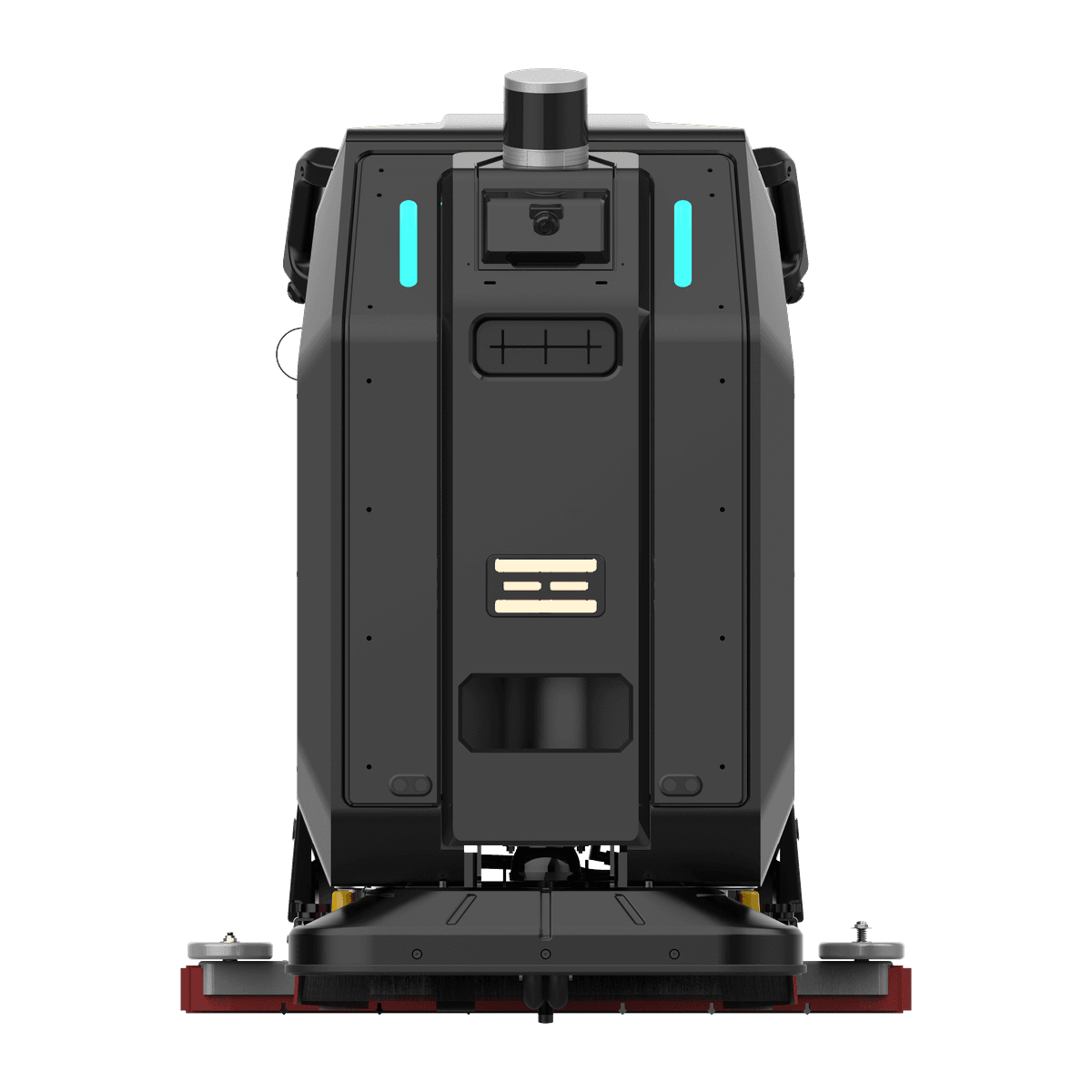
Best for: High-capacity scrubber for large open floors
- Published customer-facing MSRP guidance helps finance and operations budget before the quote process drags out
- CWS-01 separately priced accessory (Auto refill, drain, charge and discharge) supports the published service workflow when site utilities and scheduling are configured
- Route geometry, site utilities, and scheduling should be validated during deployment planning
PUDU BG1
Quote-based
Competitor
PUDU BG1
Best for: Facilities interested in PUDU's new AI-native large scrubber story and willing to validate one-pass sweep-and-scrub workflow, station requirements, and route realism during a live evaluation.
- New 2026 large scrubber-dryer platform positioned around one-pass sweep-and-scrub, AI spot cleaning, and edge-reaching scrubbing
- Public specs point to a 75 L clean tank, 60 L recovery tank, 90 Ah 48V battery, and up to 7.5 hours of stated sweeping-and-scrubbing runtime
- Best evaluated around total deployment friction, docking requirements, edge-cleaning claims, refill behavior, and service response, not just launch-stage AI messaging
Fast-answer buyer comparison
This is the commercial shortlist view, not a feature dump.
| What matters | CenoBots L50 | PUDU BG1 |
|---|---|---|
| Price posture | $41,820 MSRP guidance | Quote-based |
| Best fit | High-capacity scrubber for large open floors | Large facilities evaluating one-pass sweep-and-scrub claims, AI spot cleaning, and long stated runtime in retail, logistics, airports, or industrial support zones |
| Autonomy workflow | CWS-01 separately priced accessory (Auto refill, drain, charge and discharge), with site utilities and scheduling, can reduce daily operator touch points | AI-native route operation should be validated for docking, refill, debris pickup, charging, and intervention burden during a pilot, especially on longer nightly routes |
| Published spec posture | Known Sproutmation MSRP guidance and the optional CWS-01 separately priced accessory (Auto refill, drain, charge and discharge) | Public launch specs cite 550 to 708 mm cleaning width, 2,000 m²/h covered cleaning, and optional unattended dock support that still need real-route validation |
| Main buyer advantage | Published price guidance and the optional CWS-01 separately priced accessory (Auto refill, drain, charge and discharge) | Integrated sweep-and-scrub concept with new AI-led feature set for buyers comparing newest-platform narratives |
Why buyers compare the L50 against PUDU BG1
Most buyers searching for a PUDU BG1 alternative are already deep into evaluation. The comparison should cover route results, daily intervention, buying terms, and support ownership after go-live.
Public PUDU materials say the BG1 brings one-pass sweep-and-scrub, edge-reaching brushes, AI spot cleaning, a 75 L clean tank, a 60 L recovery tank, and up to 7.5 hours of stated sweeping-and-scrubbing runtime. Those are meaningful signals for 2026 competitor research, but buyers should still validate how those claims hold up on real debris, real corners, real docking behavior, and real service handoff.
The L50 provides visible MSRP guidance and the optional CWS-01 separately priced accessory (Auto refill, drain, charge and discharge). Buyers should validate route completion and support terms for both products.
What to verify in a live pilot
- Confirm whether one-pass sweep-and-scrub actually reduces labor on your debris profile or just changes pre-cleaning work.
- Validate docking, automatic refill, drainage, and recovery behavior at the station your building can actually support.
- Check edge cleaning, obstacle recovery, and map stability around carts, pallets, displays, and late-shift layout changes.
- Compare who owns uptime after launch week, including parts, route tuning, and on-site support response.
L50 evaluation considerations
- • You want a large-route robot with known MSRP guidance and fewer budget surprises early in the buying process.
- • You need the optional CWS-01 separately priced accessory (Auto refill, drain, charge and discharge), evaluated with the building's site utilities and schedule.
- • Compare support ownership and validate the route before procurement decisions.
When BG1 deserves a closer look
- • Your facility has meaningful dry debris plus scrub needs and one-pass sweep-and-scrub could genuinely replace extra labor steps.
- • You want to pressure-test PUDU's AI spot cleaning and edge-cleaning claims against a real retail, logistics, or airport support route.
- • Your team is comfortable running a serious pilot to verify station fit, uptime support, and real-world productivity before rollout.
PUDU BG1 alternative FAQ
What is a good PUDU BG1 alternative?
The CenoBots L50 can be compared with the PUDU BG1 using $41,820 MSRP guidance, plus the optional CWS-01 separately priced accessory (Auto refill, drain, charge and discharge).
How much does the PUDU BG1 cost compared with the CenoBots L50?
The CenoBots L50 is shown with customer-facing $41,820 MSRP guidance on this comparison path. PUDU BG1 pricing is usually quote-based, so buyers should compare station scope, support coverage, and total operator involvement instead of waiting to evaluate only after a quote appears.
How does the PUDU BG1 compare with the CenoBots L50 on specs?
Public PUDU BG1 launch specs describe a 75 L clean tank, 60 L recovery tank, 90 Ah 48V battery, up to 7.5 hours of stated sweeping-and-scrubbing runtime, 550 to 708 mm cleaning width, and up to 2,000 m²/h covered cleaning. Buyers should still validate how those numbers translate into real docking, refill, debris, and edge-cleaning behavior on their route.
Who should choose the CenoBots L50 over the PUDU BG1?
Buyers can evaluate the L50 using its published price guidance, documented workflow, and the optional CWS-01 separately priced accessory (Auto refill, drain, charge and discharge).
When does the PUDU BG1 still make sense?
The BG1 can still make sense when the route genuinely benefits from one-pass sweep-and-scrub, the pilot confirms the station workflow fits the staffing model, and the support path is credible in your region.
Can Sproutmation compare both robots using our building data?
Yes. Sproutmation can review square footage, route width, shift timing, labor pressure, service expectations, and support geography so your team can compare the L50 and BG1 on the operational factors that actually decide rollout success.