Competitor Comparison
CenoBots L3 vs PUDU CC1 Pro
If you are searching for a PUDU CC1 Pro alternative, this is the practical buyer view. The CC1 Pro stays relevant when the one-machine, all-in-one story matters most. The CenoBots L3 is usually the stronger compact commercial fit when you want better scrubber output, larger tanks, deeper autonomy, and a cleaner path to ROI for healthcare, education, retail, and senior living routes.
Choose the L3 if scrub quality matters more than an all-in-one pitch
The L3 usually wins when buyers need a compact robot that behaves like production equipment, not a lighter-duty compromise between vacuuming, sweeping, and scrubbing.
Keep CC1 Pro in play if convenience is the first requirement
The CC1 Pro stays relevant when the team values one machine and one dock first, especially in smaller or lighter-debris environments where the workflow tradeoffs are acceptable.
Compare what the operator still has to do
Most late-stage buyers are really deciding how much labor remains after deployment, including mode changes, refill interruptions, route recovery, and supervision after hours.
CenoBots L3
$24,000 MSRP guidance
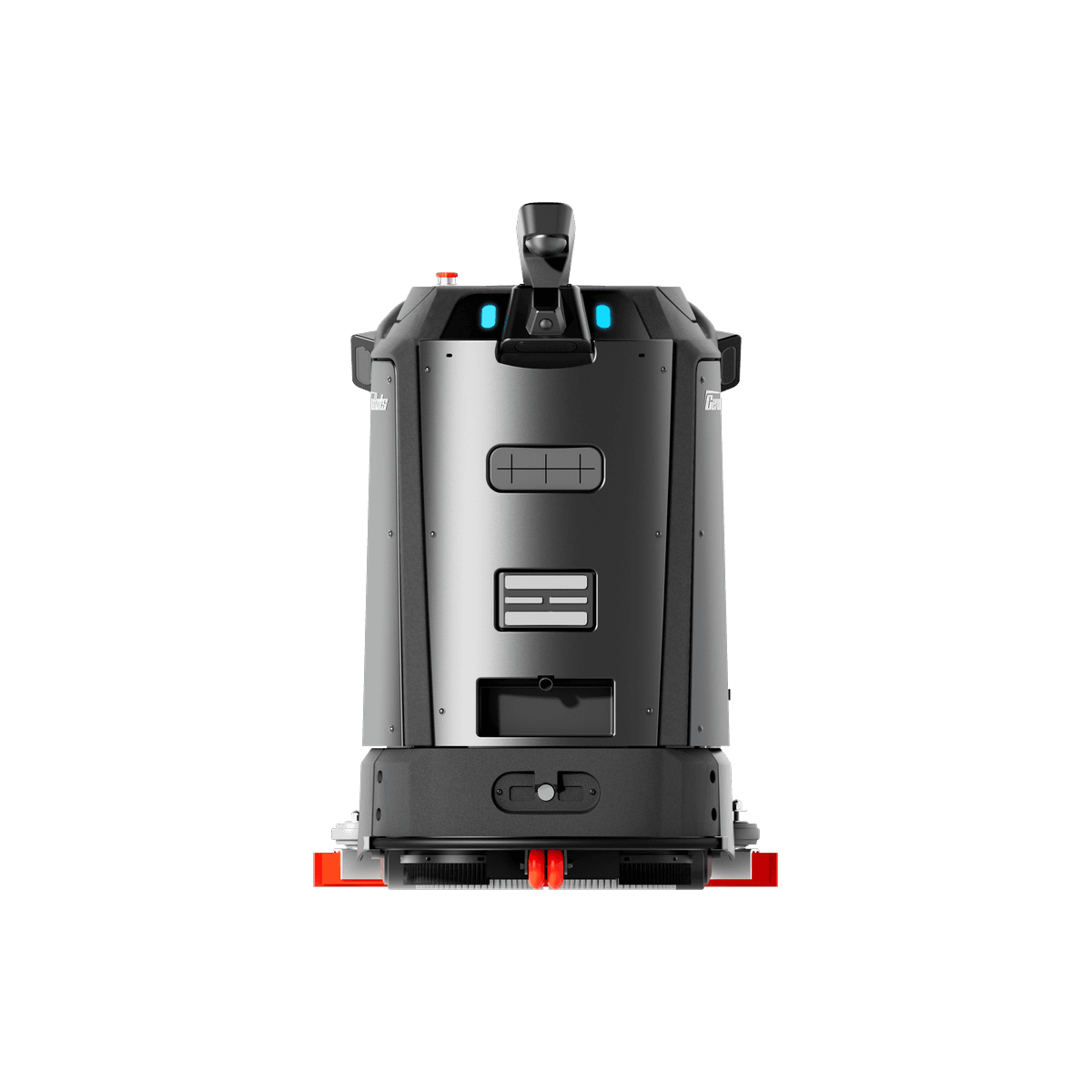
Best for: Compact commercial routes where buyers want dedicated scrubber output, larger onboard tanks, and a cleaner path to unattended nightly cleaning.
- Published customer-facing MSRP guidance helps operations and finance budget earlier
- Dedicated scrubber-first design with larger onboard water capacity for stronger real-route cleaning
- 128-beam 3D LiDAR, NVIDIA AI chip (100 TOPS), plus optional WS3 (Automatic water refill, detergent fill, water drain, and charge) and TS3 (Fixed fill and drain point) for healthcare, education, retail, and senior living routes
PUDU CC1 Pro
Package and deployment quote-based
Competitor
PUDU CC1 Pro
Best for: Buyers who prioritize an all-in-one story and want to validate whether combined vacuum, sweep, and scrub workflows fit a lighter-duty commercial route.
- Appeals to teams attracted to one robot handling multiple cleaning modes
- Can stay on the shortlist for hospitality, retail, and mixed-floor environments where convenience matters more than dedicated scrubber output
- Best evaluated around operator workflow, mode-change burden, onboard capacity, and daily consistency, not all-in-one marketing alone
Fast-answer buyer comparison
This is the commercial shortlist view, not a feature dump.
| What matters | CenoBots L3 | PUDU CC1 Pro |
|---|---|---|
| Price posture | $24,000 MSRP guidance | Package and deployment quote-based |
| Best fit | Healthcare corridors, schools, senior living, grocery perimeter routes, office buildings, mixed-use retail | Lighter-duty routes where multifunction cleaning convenience is the first buying priority |
| Cleaning posture | Dedicated scrubber-first performance with larger tanks and stronger fit for real nightly route coverage | All-in-one positioning should be validated against scrubbing quality, debris workflow, and remaining operator steps |
| Autonomy workflow | 128-beam 3D LiDAR, NVIDIA AI chip (100 TOPS), plus optional WS3 (Automatic water refill, detergent fill, water drain, and charge) and TS3 (Fixed fill and drain point) | Autonomous route operation can be attractive, but buyers should verify how much intervention remains when switching modes or recovering the route |
| Main buyer advantage | Better price-to-performance path for serious compact scrubber buyers | Broader one-machine story if multifunction cleaning matters more than scrub-first performance |
Which robot is the better buy?
For most buyers actively searching for a PUDU CC1 Pro alternative, the CenoBots L3 is the better commercial choice because it pairs dedicated compact scrubbing with customer-safe MSRP visibility, larger onboard water capacity, and a stronger unattended-cleaning story. The CC1 Pro can still stay on the shortlist, but it should win only if the all-in-one workflow is genuinely the priority and the pilot proves those tradeoffs fit the operation.
Best fit by facility
- L3: Healthcare, schools, senior living, retail, office corridors, and mixed-use sites that need real nightly scrubbing with less operator involvement.
- CC1 Pro: Smaller or lighter-debris routes where one-machine convenience matters more than dedicated scrubber output and longer unattended runtime.
- Shortlist tip: Compare refill burden, debris workflow, route recovery, and support responsiveness before assuming the all-in-one story will reduce labor in practice.
What late-stage buyers should verify before choosing either robot
Compact autonomous scrubber projects usually succeed or fail on the workflow around the machine, not the brochure alone. Ask each vendor to show what happens before the run, after the run, and whenever the route breaks or the floor condition changes.
For the CC1 Pro class, that also means pressure-testing the all-in-one promise. Buyers should understand whether multifunction convenience actually reduces labor or simply shifts labor into more supervision, more mode changes, and more daily recovery work. Teams that check those details early usually get to a clearer decision faster.
Check the scrub-first outcome
Validate whether the route really needs dedicated scrubbing performance or whether the site can live with a broader all-in-one compromise.
Check daily operator handoffs
Compare refill steps, component changes, route recovery, and who actually owns the machine when the night does not go perfectly.
FAQ
PUDU CC1 Pro alternative FAQ
What is a good PUDU CC1 Pro alternative?
The CenoBots L3 is a strong PUDU CC1 Pro alternative for buyers who want a compact autonomous scrubber with dedicated scrub-first performance, larger onboard tanks, stronger navigation hardware, and clearer customer-facing MSRP guidance.
How much does the PUDU CC1 Pro cost compared with the CenoBots L3?
The CenoBots L3 is shown with customer-facing MSRP guidance around $24,000 on this comparison path. PUDU CC1 Pro pricing typically depends on package scope and deployment details, so buyers should compare workflow, service expectations, and total operator involvement instead of waiting to compare only after a quote appears.
Who should choose the CenoBots L3 over the PUDU CC1 Pro?
The L3 is usually the better fit for healthcare, schools, senior living, retail, and mixed-use commercial routes where dedicated scrubbing performance, longer unattended runtime, and stronger autonomy matter more than combining multiple cleaning modes into one chassis.
When does the PUDU CC1 Pro still make sense?
The CC1 Pro can still make sense when your route is lighter-duty, convenience is the top priority, and your team has validated that the all-in-one workflow does not create too much maintenance or supervision overhead in daily use.
Can Sproutmation compare both robots using our building data?
Yes. Sproutmation can review route width, floor area, cleaning frequency, debris load, staffing pressure, and support expectations so your team can compare the L3 and CC1 Pro on the real factors that decide rollout success.