Evaluate the L50 workflow and published price guidance
Buyers searching for a Tennant T16AMR alternative can compare route requirements, operator tasks, and published price guidance.
Keep the T16AMR in play if Tennant standardization matters first
If your facility group already buys Tennant, depends on that service path, or needs a ride-on style platform to satisfy an internal standard, the T16AMR can still stay on the shortlist.
Compare the whole deployment workflow, not just the machine class
For late-stage buyers, the real question is how much manual work remains after the robot is on site. Charging, refill, route recovery, and local support usually decide rollout success faster than brochure positioning.
CenoBots L50
$41,820 MSRP guidance
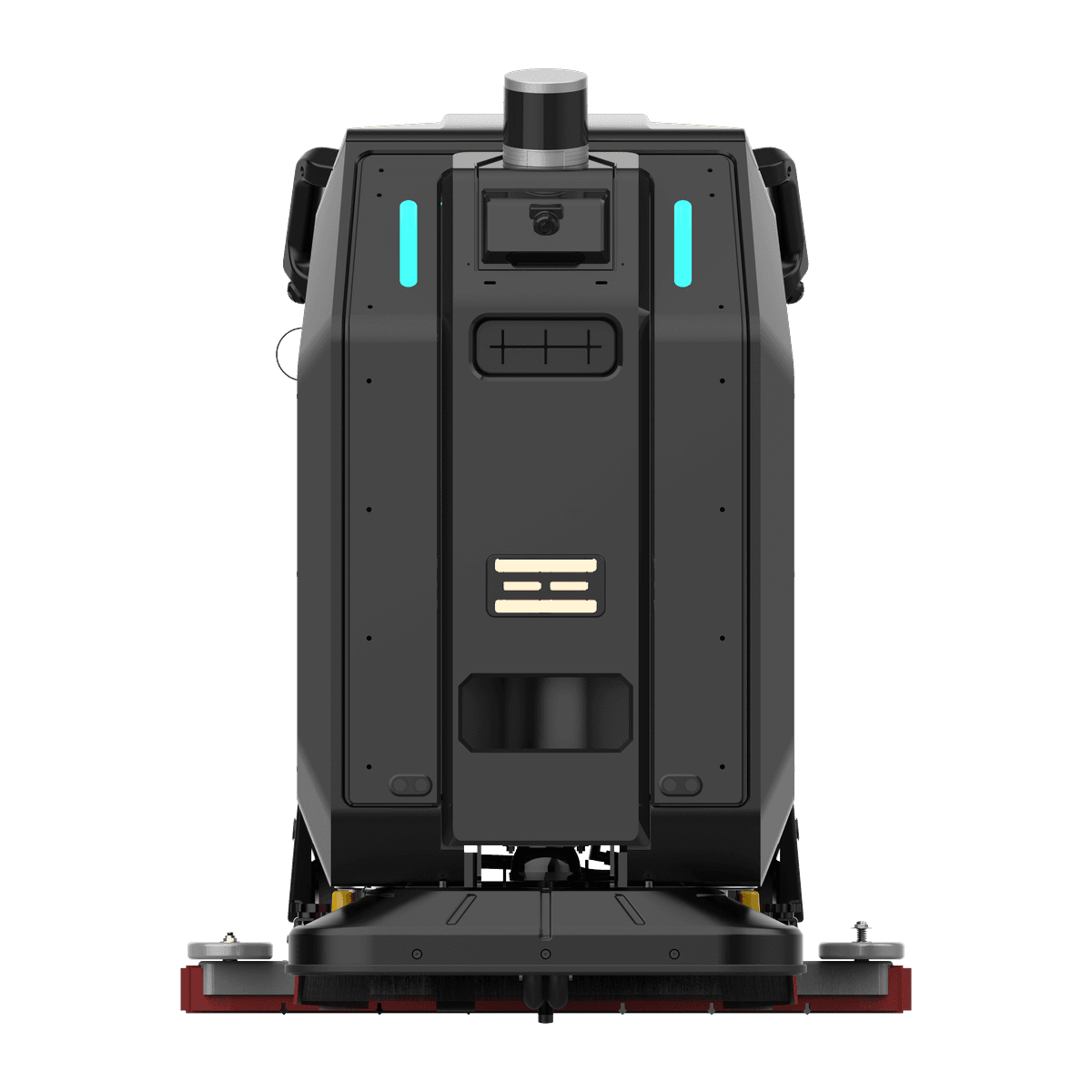
Best for: High-capacity scrubber for large open floors
- Published customer-facing MSRP guidance helps finance and operations budget before the quote process drags out
- CWS-01 separately priced accessory (Auto refill, drain, charge and discharge) supports the published service workflow when site utilities and scheduling are configured
- Route geometry, site utilities, and scheduling should be validated during deployment planning
Tennant T16AMR
Quote-based
Competitor
Tennant T16AMR
Best for: Facilities already committed to Tennant procurement or BrainOS-oriented programs and willing to validate the full operator workflow during a live evaluation.
- Recognized ride-on autonomous scrubber platform for large institutional, industrial, and public-space floor plans
- Can stay on the shortlist when incumbent Tennant relationships, fleet familiarity, or enterprise standards already point that direction
- Best evaluated around total deployment friction, turning footprint, refill behavior, route recovery, and service response, not just ride-on platform familiarity
Fast-answer buyer comparison
This is the commercial shortlist view, not a feature dump.
| What matters | CenoBots L50 | Tennant T16AMR |
|---|---|---|
| Price posture | $41,820 MSRP guidance | Quote-based |
| Best fit | High-capacity scrubber for large open floors | Very open facilities already aligned to Tennant procurement or large autonomous scrubber standardization preferences |
| Autonomy workflow | CWS-01 separately priced accessory (Auto refill, drain, charge and discharge), with site utilities and scheduling, can reduce daily operator touch points | Autonomous route operation should be validated for charging, refill, recovery, and intervention burden during a pilot, especially on longer nightly routes |
| Support conversation | Deployment scope, route setup, training, and service terms should be confirmed for the site | Support quality depends on local territory coverage, Tennant channel execution, and how responsive the post-sale path is after go-live |
| Main buyer advantage | Published price guidance and the optional CWS-01 separately priced accessory (Auto refill, drain, charge and discharge) | Enterprise ride-on platform familiarity for teams that already prefer Tennant or standardized AMR programs |
What late-stage T16AMR shoppers are usually deciding
Most buyers searching for a Tennant T16AMR alternative are already deep into evaluation. The comparison should cover route results, daily intervention, buying terms, and support ownership after go-live.
That is why the right comparison is not just ride-on versus walk-behind, or published productivity versus brochure productivity. The real decision sits in route recovery, charging workflow, refill interruptions, staffing model, and how quickly your service path responds when the robot misses a night.
Quick buyer take
- Evaluate L50 using its published price guidance and the optional CWS-01 separately priced accessory (Auto refill, drain, charge and discharge).
- Keep T16AMR in play when your organization is already standardized on Tennant equipment, support, or ride-on operator preferences.
- Validate the route class if the team assumes a heavier ride-on platform is required before testing whether the building really needs that footprint.
Why buyers broaden a T16AMR comparison
- They want clearer budget visibility before investing time in a quote-led process.
- They want a comparison of the optional CWS-01 separately priced accessory (Auto refill, drain, charge and discharge) against their site utilities and schedule.
- They want to compare deployment responsibilities and service terms alongside the incumbent brand path.
Where the T16AMR can still make sense
- Your organization already standardizes on Tennant equipment, support, and buying contracts.
- You have already validated the T16AMR workflow and know the remaining operator burden fits your staffing model.
- Your team truly needs the ride-on platform class and has the open floorplan to support it without compromising route flexibility.
FAQ
Questions buyers ask before choosing between L50 and T16AMR
Late-stage buyer questions we hear from teams comparing CenoBots and Tennant.
What is a good Tennant T16AMR alternative?
The CenoBots L50 can be compared with the Tennant T16AMR using $41,820 MSRP guidance and the optional CWS-01 separately priced accessory (Auto refill, drain, charge and discharge).
How much does the Tennant T16AMR cost compared with the CenoBots L50?
The CenoBots L50 is shown with customer-facing $41,820 MSRP guidance on this comparison path. Tennant T16AMR pricing is usually quote-based, so buyers should compare workflow, support coverage, and total operator involvement instead of waiting to evaluate only after a quote appears.
Who should choose the CenoBots L50 over the Tennant T16AMR?
Buyers can evaluate the L50 using its published price guidance, documented workflow, and the optional CWS-01 separately priced accessory (Auto refill, drain, charge and discharge).
When does the Tennant T16AMR still make sense?
The T16AMR can still make sense when the organization is already standardized on Tennant, the pilot confirms the workflow fits the staffing model, and the local support path is already trusted by the facility team.
Can Sproutmation compare both robots using our building data?
Yes. Sproutmation can review square footage, route width, shift timing, labor pressure, service expectations, and support geography so your team can compare the L50 and T16AMR on the operational factors that actually decide rollout success.