Competitor Comparison
CenoBots L4 vs Tennant X4 ROVR
If you are searching for a Tennant X4 ROVR alternative, this is the practical buyer view. The X4 ROVR is a serious compact-to-mid-size AMR option for tighter aisles and Tennant-oriented buyers. The CenoBots L4 is usually the stronger choice when your team wants longer runtime, customer-safe MSRP visibility, and a more complete unattended cleaning workflow for schools, healthcare, retail, senior living, and mixed commercial routes.
Choose the L4 if route completion matters more than the tightest aisle number
The L4 usually wins when buyers need a mid-size scrubber that can cover more route time per shift with fewer interruptions and a more complete unattended workflow.
Choose X4 ROVR if tighter navigation and Tennant standardization matter first
The X4 ROVR stays in the conversation when your route has tighter aisle constraints or when Tennant and BrainOS familiarity heavily influence procurement.
Compare daily operator burden, not just brochure specs
Late-stage buyers should pressure-test charging, refill steps, recovery handling, and route restart behavior, because those details decide whether labor is actually removed from the shift.
CenoBots L4
$35,833 MSRP
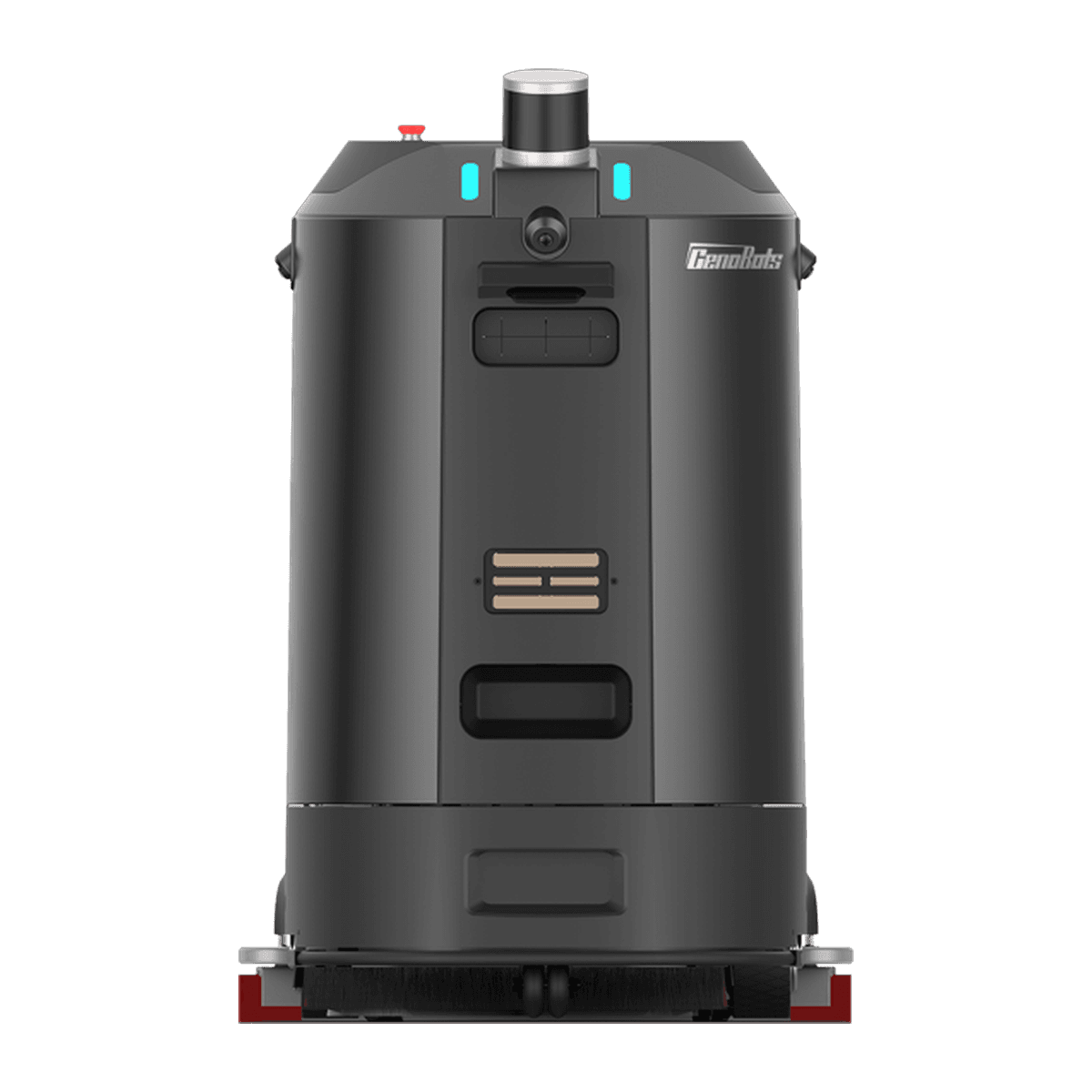
Best for: Mid-size commercial routes where buyers want strong scrub-first performance, longer runtime, and a more complete unattended workflow than most compact AMR scrubbers provide.
- Published MSRP gives operations and finance a cleaner budgeting starting point
- 10 gal / 38 L solution / 9.5 gal / 36 L recovery, 44 lbs / 20 kg brush pressure, and 4.5 hours battery life for longer route coverage
- Workstation-ready autonomy supports CWS-01 (Auto refill, drain, charge and discharge), a separately priced accessory, with less daily operator touch
Tennant X4 ROVR
Quote-based
Best for: Facilities that prioritize tighter-aisle navigation, BrainOS familiarity, or existing Tennant buying channels over a longer unattended runtime story.
- Published 20 in / 500 mm cleaning path with 10 gal / 38 L solution and recovery tanks
- BrainOS teach-and-repeat plus area-fill workflow, with aisle navigation published as low as 28 in / 71 cm
- Up to 42 lb / 19 kg down pressure and up to 2.5 hours autonomous scrubbing runtime in a compact 22 in / 56 cm machine width
Fast-answer buyer comparison
This is the commercial shortlist view, not a feature dump.
| What matters | CenoBots L4 | Tennant X4 ROVR |
|---|---|---|
| Price posture | $35,833 MSRP | Quote-based |
| Cleaning path | 17.7 in / 450 mm | 20 in / 500 mm |
| Tank setup | 10 gal / 38 L solution / 9.5 gal / 36 L recovery | 10 gal solution / 10 gal recovery |
| Runtime story | 4.5 hours battery life | Up to 2.5 hours autonomous scrubbing |
| Aisle fit | 31.9 in / 810 mm minimum passage width | Aisle navigation as low as 28 in / 71 cm |
| Autonomy workflow | Workstation-ready with CWS-01 (Auto refill, drain, charge and discharge), a separately priced accessory, for lower operator touch | BrainOS teach-and-repeat and area-fill; buyers should validate refill, charging, and intervention steps during a pilot |
This is really a workflow comparison
On paper, both robots land in the same mid-size autonomous scrubber conversation. In practice, the buying decision usually comes down to workflow. The X4 ROVR offers a tighter-aisle, BrainOS-based path with a compact machine width. The L4 usually becomes the stronger shortlist candidate when buyers want a longer runtime, stronger unattended-route story, and a clearer path to ROI without waiting for quote-first pricing.
A tighter aisle number does not automatically mean a better deployment
The X4 ROVR publishes aisle navigation as low as 28 inches, which matters in tighter corridors and constrained retail or healthcare routes. But many commercial buyers discover the bigger issue is not the tightest aisle in the building. It is whether the robot can finish enough of the route each night with acceptable intervention, charging, and refill burden. That is where the L4 can become the better operational fit.
Pilot around route economics, not brand comfort
Facilities already familiar with Tennant may naturally keep the X4 ROVR on the shortlist. That is reasonable. But a fair pilot should compare the real route window, labor hours displaced, operator touch points, local support responsiveness, and how cleanly the machine fits your nightly schedule. Those are the factors that usually decide whether the robot becomes a lasting part of operations or just an interesting demo.
Frequently asked questions
What is a good Tennant X4 ROVR alternative?
The CenoBots L4 is a strong Tennant X4 ROVR alternative for buyers who want a mid-size autonomous scrubber with customer-facing MSRP guidance, longer runtime, and CWS-01 (Auto refill, drain, charge and discharge) as a separately priced accessory for a more complete unattended workflow.
How does the Tennant X4 ROVR compare on route fit?
The X4 ROVR stays attractive for tighter aisles because Tennant publishes aisle navigation as low as 28 inches. The L4 is usually the better fit when the route has a little more room and the buyer wants stronger shift coverage, longer battery life, and a lower-touch autonomy workflow.
Does the CenoBots L4 have a longer runtime than the Tennant X4 ROVR?
Yes. The L4 is published with 4.5 hours of battery life, while Tennant publishes the X4 ROVR with up to 2.5 hours of autonomous scrubbing runtime. Buyers should still validate real-world route time during a pilot.
Who should still keep the Tennant X4 ROVR on the shortlist?
Buyers who need tighter aisle navigation, prefer BrainOS teach-and-repeat plus area-fill, or already operate inside Tennant procurement and service channels should keep the X4 ROVR in the evaluation set.
Can Sproutmation help compare both robots using our building data?
Yes. Sproutmation can review route width, floor area, cleaning frequency, labor pressure, and support expectations so your team can compare the L4 and X4 ROVR on real deployment fit instead of brochure impressions alone.